Today we ask that you pay attention to the nervous tension you carry within your body.

Many of you are tense all the time.  You literally do not remember what it feels like to truly relax.

Watching TV during one’s down time is not relaxing.  What happens to your body when you watch the news, or TV dramas, or reality shows?  Certainly, it is not relaxing for you.

Between the drama of your daily lives and the collective dramas you experience in the news, no wonder so few of you are relaxed.

Chronic nervous tension is not good for the body.  In fact, the vast majority of illnesses experienced by individuals in “first world” countries is caused by chronic nervous tension.  This is what is so burdensome for your health care systems.

Relax.  Relax.  Please, relax.

Please remember how to give yourselves true down time.

Turn off the computer, phone, and TV.  Go outside.  Get some fresh air.

Receive a massage.  Get back in your body.

It is madness, after a tense day, to sit and watch the news, or tension-creating TV shows.

Sometimes power failures are not such a terrible thing.  It is the only opportunity for true peace and quiet that some people may experience.

Relax.  Relax.  Please, relax.

So many of your health problems would be eased if you could only let yourselves relax completely.

And being tense and nervous is not going to fix any of the world’s problems.  Cause them, yes.  Solve them, no.

So just notice how tense you may feel in this moment.

Can you remember a time when you were truly relaxed?  What were you doing — or not doing?

See if you can cultivate a relaxed feeling even now.  It is always possible.

Take a deep breath.  Relax, relax.
Today we ask that you remain calm in the face of collective anxiety.

Whether there are literal storms or not, there are always psychic storms going on in your reality.  Your reality is highly dramatic — a riveting drama, really.  Which, believe it or not, is exactly how most of you like it.

Consider how much you enjoy watching movies and TV shows in which the stakes are very high.  There is riveting dramatic conflict.  Often the fate of the world is at stake!

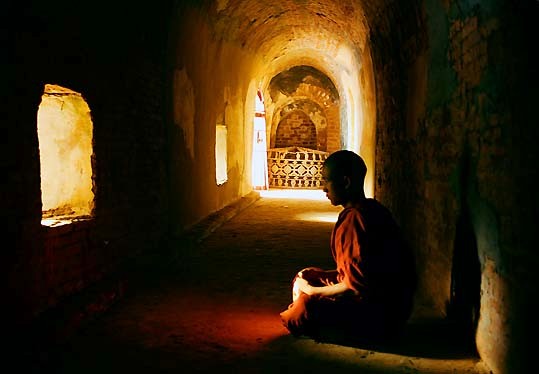
You would not watch a TV show about peaceful people calmly going about their ordinary lives.  It would not be very dramatic.  It would be rather boring to you — watching a group of Zen monks, let’s say, meditating and scrubbing the floor.  Not very exciting.

Instead, you enjoy your dramas and thrillers and action movies.  You enjoy watching people in peril, with the stakes very high.

So it should be no surprise that there is a lot of drama in your world.  It is exciting, isn’t it?  Like a movie, with very high stakes.

Sooner or later, however, many people grow a bit weary of the drama.  They would like life to be more peaceful.

But how can your world become more peaceful if you do not know how to cultivate peace in your individual daily lives?  How is the world going to become less dramatic when so many of you are such “drama queens” — living your own private soap operas, and “reality shows.”

This is why peace in this world starts with you, right now, at this moment.

Part of you may find the “Zen monk” lifestyle boring.  This is actually a somewhat immature part.  You can imagine a child observing a person in meditation thinking: “Oh, that looks so boring!”

But there is a wiser, more mature part of the self that can perceive that what the meditating monks are doing is not “boring” in the least.  For they are doing what so few people do in this world.

They are stepping outside the drama.

What does it mean to step outside the drama?

It means all the world’s dramas continue to play out, with all their grandiosity and high stakes — but you are not so affected by it.

You observe the drama, but you are not caught up in it.

And then you become a very useful person.

You become like the “Obi Wan” or the “Yoda” or the “Gandalf.”  Such figures are actually immensely helpful in creating peace within their respective world dramas — but this is only because they have spent a great deal of time cultivating their own inner peace.

So that is why it is good to spend less time caught up in all the “real” or “fictional” dramas on TV, and more time cultivating a peaceful mind through meditative practices.

That way, when a true crisis unfolds, you will be the kind of person who helps to restore peace — instead of further heightening the drama.

Today we ask that you do not add your own fears to fearful situations.

What does this mean?

In your reality, fearful situations arise.  They may be on a large scale, or a small scale.  There may be sweeping natural disasters, or private emergencies.

Humans have been trained to believe that the way to express their caring for people who are involved in such crises is by getting caught up in the other people’s pain.

“Oh, that is awful!  How horrible!  I am so sorry for you!”

But really, this does not help at all.  It never helps.

In a crisis situation, do you think are helping someone by becoming panicky and hysterical?  Can’t you see that such behavior only makes an unpleasant situation even worse?

The best thing to do in any crisis situation is to quiet down the mind and restore calm.  A calm person is always far better equipped to deal with any crisis than a hysterical, panicked person.

This is true even when you are removed from the crisis by distance.

It helps no one to sit in front of the TV watching a large scale crisis unfold, projecting all kinds of fear and panic toward the situation.  Since everything is connected energetically, this only makes things worse.

The best thing to do is send calm, peaceful, loving energy to anyone involved in a crisis.

Do not get caught up in the fearful drama.  That helps no one.  Do not addictively watch traumatic events on TV.  That helps no one.

Do whatever you can to remain calm.  Breathe.  Meditate.  Send that stabilizing energy toward the people involved.

Staying calm in a crisis certainly doesn’t mean you “don’t care.”  That is nonsense.

When people are in pain, they lash out at others.  One of the ways they lash out is by saying “You don’t really care!”

Don’t listen to this.  When people are in pain, they cannot think clearly.  That is why the best thing you can do is think clearly on their behalf.

Do not add your fear to a crisis.

Remain calm.  That is how you can most capably respond.


Today we ask that you hold compassion for the people who challenge you most.

Maybe this is someone in your life whom you feel deeply wronged by.  Maybe it is a parent, or an ex-lover or spouse.  Maybe it is a family member.  Maybe it is a former partner or boss.  

It is someone who arouses a feeling of hatred in you.

It does not have to be someone you know personally.  It can be a politician.  It can be some symbolic individual who represents a collective “enemy” to what you hold dear.  Someone who threatens you.  

Whoever it is, we would ask you to sit with this person, in your mind.  Allow yourself to feel all the negative feelings.  The hatred, the anger.  Even the violence.

Now: imagine this person as a little child.  Just imagine what this person you hate looked like as a little child.  And once you have that image clearly in mind, sit with it.  Sit with the little child version of this being you hate.  Sit with the little child — playing with toys, or sleeping in a crib, or crying.

Notice what happens to your feelings.

Do you still want to attack that little child?  Do you want to scream at it?  Do you want to strike it?

Or do you feel a spark of compassion.  This little child is no threat to you.  This little child might even be hurt, or confused.  You might want to help it in some way.

Sit with this feeling, whatever it is.

It is a very simple, but powerful exercise — one you can do anytime you notice a feeling of hatred toward an “enemy.”  Every “enemy” was once a little child.

Today we ask that you learn to honor the process, and not focus on completion.

You live in a society in which much emphasis is placed upon “finishing things.”  You are all about deadlines, grades, markers of achievement.  You are all about the “bottom line,” quarterly reports, statements of profit and loss.  You are all about the finished work.  You want everything in a rush.  You want it yesterday.  There is no patience.  It is all about instant gratification.

You honor people who get things done in a great hurry.  If you hear that a great work of art was completed in a week, this sounds better to you than a great work of art that took many years to create.  

Never mind that the artists who produce great works of art in a mad rush to completion usually do not have long lifespans, and often abuse their bodies with drugs and stimulants.  Whereas artists who take longer to do things often live longer, for they may be happier and more well-balanced.

This holds true for everyone.

If you wish to be happier and healthier in this life, one of the simplest things you can do is just slow down.

Slow down.

Why is there such a great rush?  Will getting things done faster make them better?  Isn’t it true that things done in a rush are usually of poorer quality than things that are given time?

You humans.  If you had your way, you would make everything faster.  Trees would grow in a week.  Human infants would gestate in one month, not nine.   Always with you it is faster, faster, faster, so that you can get more done!

But really, often, the faster you go, the less is actually accomplished.  There is so much wasted effort in your world.  So much storm and fury signifying nothing.  All these people rushing around and firing off emails and texts and really doing nothing.

Whereas the people who stop to breathe, and meditate — the ones who appear to be doing nothing — these are the ones who are really doing something.

Please learn to enjoy the process.  The day-to-day labors.  The little things.  Yes, it is good to complete things, to reach a state of completion.  At the same time, nothing in this life is ever complete.  So if you don’t learn to enjoy the process, life will always be rather miserable for you.

Slow down.

Enjoy the process.

Give yourself, and other people, space.

Today we ask that you let go of the need to understand why certain things happen.

This is, of course, very challenging for the human ego, whose prime directive is to understand, analyze, and make reductive assessments about everything it encounters.

And yet it is quite impossible for the human mind to comprehend most of what is happening in any given moment.

Think about this.  How many times have you been convinced that something that is happening to you is horrible, unjust, and wrong — only to discover later that it really was all for the best?

Children often hate things that grown-ups know to be “good for them.”  They kick and scream and throw tantrums.  They howl in outrage.  Meanwhile, the loving parent knows that what is happening is truly for the good of the child.

This is the situation that most of you are in.  The human ego consciousness is in many ways quite childish, and undeveloped.  So, like children, many people kick and scream and throw tantrums when reality is actually doing something that is very good for them.

Reality is loving.  Despite all appearances, reality is loving.

But reality wants you to eat your vegetables.

“Vegetables” are, in this instance, difficult or frustrating or even traumatic things that happen, that are in the long run very good for you.

So you kick and scream and throw tantrums when reality wants you to eat your vegetables.

But it is not because reality is cruel, any more than the parent who wants his child to eat healthy, nourishing food is cruel.

That is why it is best to cultivate an attitude of simple trust and faith in what reality is serving up.

Maybe those vegetables are good for you.

Maybe you can even acquire a taste for vegetables!

Today we ask that you learn how to sit with and receive good things.

Humans are very funny.  All you want in life is for “good things” to happen — good fortune, recognition for good work, meeting the right partner, success, and so on.

And yet when such things do come to you, how hard it is to just sit and enjoy the good feeling of it.

The ego mind is habituated to continually seek problems and threats.  When things are going well, the ego’s existence is threatened.  In order to perpetuate its existence, it therefore needs to continually create dramas and problems.

If you think on this, you will see it is true.

Perhaps you have just gotten engaged to someone you love.  Good news!

But then you are immediately stressed out by having to plan a wedding.

Perhaps you have just conceived a child.  Good news!

But then you are immediately stressed out by fears around pregnancy, childbirth, not to mention preparing for a new baby.

Perhaps you have just come into some money.  Good news!

But then you are immediately stressed out by what to do with the money.  How do you best invest it?  

Perhaps you have just created a work of art.  Good news!

But then you are immediately stressed out by how this work of art will be received by other people.

Do you see the pattern?

This is what the ego does.  In order to perpetuate its existence, it must continually create new problems and dramas.

If there were no problems and dramas, the ego would cease to exist, as you know it.  You would be happy,  and at peace.  The drama would be over.

It is possible to learn to step outside of the drama.

One way to do this is to really learn to sit still with goodness.  To enjoy the sweetness of life that is around you in any moment — in the sunrise, the birds singing, the flowers.  

Can you learn to sit still with goodness?  To just draw out those good feelings, when you experience them, without allowing the mind to compulsively look for the next problem to solve?

Stop trying to fix everything.  Appreciate the deep goodness that is here now.

Learn to sit still with the good things that happen.

Today we ask that you have faith that the love you put into things is never lost.

Sometimes, because you live in a very fluid and impermanent reality, it is easy to believe that love can be lost.

Someone you love dies.  You cannot see that person anymore.  It may feel like everything you shared is lost.

People who do not believe in the continuance of the soul often believe that consciousness is irretrievably lost at death.

Such people often become obsessed with making a mark on the world.  They strive to be recognized, to leave something behind so that people will speak their names when they are gone.  Failing this, they attempt to shape their children, and implant their personas into their children so that some part of them will survive after death.

How very sad and destructive such behavior is.  And it is all because people believe things can really disappear and be lost forever.

It is true that all things of form will in time disappear and be forgotten, no matter how famous they might have been in their day.  10,000 years from now, what shall be remembered of this moment in time?  Very little, if anything.

But love is not lost.  It is never lost.

Love is a form of energy.  Or, rather, it is all energy — love and light being different faces of the same thing.

Physicists know that it is impossible to destroy energy.  When matter is destroyed, the energy within it is released.  Einstein’s famous equation describes the vast quantity of energy contained within a tiny amount of matter.

So the love that you put into relationships and what you create in this life is not lost.  It remains, when everything else dissolves.

When you put true love into your actions and creations, this will always be felt.  The love will create a deep spark of connection.

Usually the greatest block to the free flow of love in your reality is egoic delusion.  Egoic delusion tries to take what is purely loving and warp it or cover it up — like when a parent’s pure love for a child becomes confused by the parent’s own egoic desires and fantasies.  

The more you can let go of these blockages, the more freely love will flow from you into the world, and return to you increased in magnitude.  For love is an energy that increases as it flows through the hearts of beings.  

This energy cannot be lost, and is never lost.  It does not disappear, or die.

It is okay if you do not believe this.  But feeling the permanence of love has a way of easing one’s fears about mortality and loss.  Life becomes much more enjoyable.

Today we ask that you let go of the need to be right.

Of all egoic desires, the need to be right is one of the most powerful.  

Think about it.  Don’t you enjoy being proven right?  Isn’t there a deep thrill of satisfaction when someone tells you “You are right” — particularly someone who may have previously said you were wrong.

Relationships break acrimoniously because people need to be right.  Wars have been fought because a handful of people needed to be right.  This is literally true.  Millions died in the first World War because a handful of people needed to be right, and this in turn set the stage for the second World War.  Dictators and tyrants have killed millions, all because they needed to be right.

Children often need to be right.  They squabble and fight and throw tantrums because they need to be right.

Most so-called adults are not much better than children in this regard.

One of the signs of true maturity is letting go of the need to be right about everything all the time.

Sometimes the greatest single action you can take as a human is simply to say to someone else: “You could be right.”

This doesn’t mean they are right.

But by simply acknowledging the mere possibility that they could be right, you open up space between you, and the other.

By saying “You could be right,” it opens space for you to hear the other person.  To really listen.

And if you can really listen to the other person, this means there is a much better chance that the other person might be able to hear you.

Try it.  Even when you are arguing with someone in your mind, try saying: “You could be right,” and see what happens.

Notice how much resistance you may feel around this, even with a projection in your mind.

Saying “You could be right” is like a magic spell.  It instantly defuses tension, and creates space.

Let go of your need to be right.  It is, perhaps, one of the healthiest, most beneficial sacrifices you can make in life.