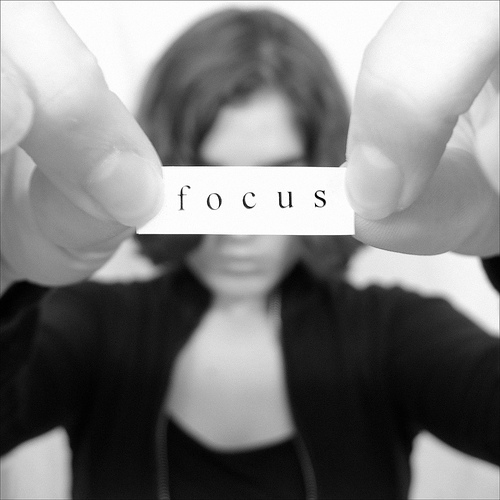
Today we ask that you observe the discursive nature of your thoughts.

Life really is not all that complicated.  It is complicated only in the mind; in the thoughts.

In reality, you can only do one thing at a time.  You eat breakfast.  You take a shower.  You look at things on the internet.  You drive a car.  You speak with someone on a phone.  You write an email.

Yes, you can attempt to “multitask.”  But “multitasking” isn’t really “multitasking,” in the sense that you are doing many things all at once.  Rather, you are rapidly shifting your primary attention between several different focal points.

So, if you are talking on the phone and checking email at the same time, really what is happening is that first you pay attention to the conversation, then you pay attention to the email, then you pay attention to the conversation.  Of course, this jumping happens very rapidly.  Nevertheless, in any given millisecond, your conscious mind is focused on one primary object.

Yes, you can take a shower with your mind racing back and forth, you can drive a car with your mind racing.  But even there, your consciousness is rapidly shifting between focal points.  Sometimes you must focus on driving.  Other times, you are focused on your discursive thought flow, while the driving is left to subconscious, or autonomic processes (you are on “auto-pilot.”)

On the whole, this continual rapid attention-jumping is not particularly productive.  Letting the discursive thought process run away with you is not particularly productive, either.

Many of you have had the experience of getting a lot done when you are able to focus your conscious attention on one subject for an extended period of time.

Basically, this is always the case.   Multitasking does not get more done, but is actually terribly unproductive.

It really very simple.  When the mind is scattered, the will is scattered.  The life force itself is scattered.

Imagine what would happen if a champion athlete “multitasked” in the middle of a race.   He would lose very quickly!  Of course, this does not happen.  In order to become a champion athlete, the athlete must learn to focus his mind completely on the task at hand.  This concentrates  his will, and his life force — thus allowing the athlete to accomplish incredible feats.

There is not one of you out there who cannot benefit from learning to focus in this way.

Here are some very simple techniques:

  • When engaged in any task, set a timer.  Give your conscious mind a set period in which you will not check email or the internet, or stop and do something else.  It need not be a lengthy period.  Even ten or fifteen minutes can be enough.  A lot can be accomplished in ten minutes of totally focused attention.
  • Break large tasks up into small, discrete pieces. Again, this is where a lot can be accomplished even in ten or fifteen minutes.  The state of “overwhelm” occurs when one contemplates what seems like a very large task.  Paralysis sets in; the task is too large, and therefore impossible.  Much easier to wander around on the internet than focus on that impossible mountain.  Break it up.  You can’t swallow an apple in one big gulp.  You must chew it in small pieces.
  • Make sure to consciously appreciate yourself when you do finish a small task.  It is very common, when setting out to do something healthy, that a critical voice immediately attacks you for not doing enough or starting too late.  This voice is 100% predictable.  It is like clockwork.  If you hear this voice, know that it is actually a sign you are on the right track.  Don’t listen to it.
  • Cultivate practices that stabilize the consciousness and help you learn not to get carried away by the stream of discursive thought.  Meditation is an extremely simple practice that requires you only to set a timer for ten or fifteen or twenty minutes, sit down upright, listen to your breath, and pay attention to your racing mind — not letting it run away, but gently bringing attention back to the breath.  Learning how to count the breath is very helpful.  Practices like yoga, tai chi, and qigong are very helpful.  Any activity that gets you out of your mind and back into your body is helpful.
  • Be loving and gentle with yourself.  Being punitive with yourself for not accomplishing things sets up a negative feedback loop that makes you even less motivated to do simple tasks.  This is why it is essential to actively, consciously appreciate yourself for engaging in any healthy practice, or accomplishing any task, no matter how small and insignificant.  Be a good parent to yourself.  When a child does something good — when he fingerpaints or solves a puzzle or picks up his socks — the healthy parent applauds and encourages him, setting up a positive feedback loop.  You must learn to do this with yourselves, regardless of the ways in which you were parented.

Do these things — learn to focus the mind and stabilize the consciousness, and be kind to yourself — and your experience of life will transform, like the withered garden that springs to life when it is watered and nurtured.  

Today we ask that you not waste time overthinking things.

People spend a great deal of time sitting around thinking, instead of actually doing things.  Rather than do something, they think: “Should I be doing something else?”  “Am I in this position I don’t like because I made a mistake in the past?” “Am I doing the wrong thing?” “The grass looks greener over there.”

Meanwhile, nothing is actually getting done.  And you are wasting a great deal of time and energy.

Just focus on whatever it is you need to do right now.  Do not be in two places at once — trying to do something, but thinking about all the other things you could be doing instead.

Settle your mind.  Settle your mind.

Calm down.

You will accomplish very little with your brain scattered in all these different directions.

Most of you have things that you need to do; that must be taken care of.  Instead of spending your time neurotically thinking about your past and future, get present and do what needs to be done today.

Settle your mind.  Clean your home.  Organize your clutter.  Focus on the immediate tasks at hand.  With a settled mind, and a clean house, other things will fall into place.

Settle your mind.  Take care of your body, your home, and your immediate tasks.  If you find yourself caught in a neurotic thought loop, break it.  Get up.  Go for a walk.  Meditate.  Exercise.  Clear your mind.

Stabilize your energy, and everything else will fall into place.

Today we ask that you be patient with the slow, steady processes of life.

If you look at the way life works, generally things do not happen quickly.  It takes time for plants to grow.  The more complex the plant, the more time it takes.  Trees take many years to grow.  But they also live for many years.

So it is with animals and humans.  Healthy growth requires time and patience.  It takes nine months to gestate a healthy human infant — and many, many years of patient nurturing to create a healthy adult.

Yet in this modern age a great premium is put on speed.  People want things now.  Everyone is expected to do things faster.  Grown adults have become as impatient as little children, throwing tantrums when they cannot get the things they want right now!

This is an extremely unhealthy, counterproductive approach to life.

Making things quickly necessitates that they be somewhat disposable.  Nothing is built to last.  There is a shoddiness to the work people do and create, as a result of the rushed nature of their labor.  And this pervades everything.

In nature, some things proliferate very quickly — and on the whole they are not things that humans like.  Viruses proliferate quickly.  Bacteria proliferate quickly.  Fungi proliferate quickly.  Certain insects can proliferate quickly.  Usually when these things proliferate quickly, it is a sign of a decaying, diseased, unbalanced system.

In the human body, healthy cells take time to grow.

But cancer cells proliferate quickly.

Forcing speed can be extremely damaging to life forms.

In healthy development, it is all about the process, not the end result.  It is all steps and stages.  New things gradually take form, growing little by little — imperceptibly, to the human eye.

Certainly there is nothing wrong with the great advances of the internet age, and the capacity humans now possess to rapidly access information and connect with each other.

But to the degree that this encourages impatience and the need for instant gratification, this is not so good.

Nor is it good to demand that companies or economies experience constant rapid growth. Indeed, that is a “cancerous” pattern.

Please remember this.  It is okay sometimes to push and sprint, but that cannot be a way of life.

In nature, the one place one sees constant rapid growth is in viruses, bacteria, and cancer.  Constant rapid growth is not healthy, and not sustainable.

Today we ask that you accept the things that happen to you, even if you don’t like them.

There is a tendency, when you experience an undesired outcome, to sit brooding over the event.  The main question that is asked is: who is to blame?  Depending on the kind of person you are, you may be more apt to blame other people or external forces, or you may tend to internalize blame and fiercely criticize yourself.  Usually, both external and internal blame is assigned.

The reason you do this is because you believe that by assigning blame, you can “learn from your mistakes” and prevent similar incidents from occurring in the future.  In this way, you will gain greater control over reality, and ensure that life turns out the way you want it to.  You will be protected from future disappointments, and ensure your security.

The problem here is that none of that reasoning, as logical as it may seem, is remotely true.

Things happen because they happen.  You cannot control reality, no matter how hard you try.

Attempting to figure out why things happen is impossible in your current state of existence.

Imagine that you have a pet dog or cat that has injured himself.  You take him to a veterinarian, where he receives treatment.  Later, he is released into your care, but is required to wear a cone around his neck until his injury is healed, to prevent the animal from biting or irritating his injury.

From the animal’s perspective, this is a series of utterly horrific, terrifying events.  The animal is brought to a strange, frightening place; poked and prodded by strangers; and when he returns home he must wear this awful thing around his neck that prevents him from seeing or moving around properly.  

Of course, you know better.  You know that all these steps are necessary for the animal to be healed.

Now, if the animal had a human-like mind, he might come up with all kinds of theories about this experience, and look to assign blame.  He might believe he is being “abducted by aliens,” when he is at the vet.  The cone around his neck is some sort of alien device.  And clearly you, his owner, are in on this terrible conspiracy!

Fortunately, animals do not think this way.  They simply experience things as they happen, and they do not assign blame.  They know how to shake off traumatic experiences and not let them linger.

When you attempt to figure out why bad things happen and assign blame, you are like a dog who believes that a veterinary hospital is an alien spaceship.  

You do not, in your current limited state of perception, have enough information to figure out why things happen the way they do, let alone assign blame.

This is not to say one cannot “learn from mistakes.”  Certainly it is not wise to stick one’s hand into a fire over and over again.  But the basic learning process does not involve blame, shame, guilt, or recrimination.

You must let go of your sense of injustice, victimhood, and outrage that reality isn’t the way you think it ought to be.

Just accept what happens, and get on with things.  Do not linger in your anger and outrage — that only prolongs the trauma.  Do not try to figure out who is to blame.  Just deal with situations as they arise in the present moment.

You will be much happier, if you do.


Today we ask that you take time to ground yourself.

There is an enormous amount of energy moving through your reality.  And your bodies conduct and absorb it — particularly your nervous system.  The human brain generates and absorbs a vast amount of energy.

Human brains are a lot like nuclear reactors.  In order to function properly, they must be cooled down.  Otherwise they overheat, and when this happens, things can get quite toxic.

What heats the brain?  Any kind of cogitative thought.  Strategizing, planning, calculating.  Imagination heats the brain even more — visualizing, fantasizing.  Worry is a negative use of the imagination that heats the brain.  All creative work heats the brain.  Watching TV, or looking at information on a screen heats the brain.  Computers are very heating for the brain and nervous system.

What cools the brain?  Being outdoors.  Bathing in water.  Engaging in activities that minimize cogitative or creative thought and require that you “be in your body.”  Exercise, yoga, dance, many forms of martial arts.  Meditation.  Deep breathing is very cooling for the brain.  Being around animals or small children cools the brain.

Caffeine and sugar heat the brain.  Water and green vegetables cool the brain.

It is very important to cool the nervous system.  Many forms of mental and physical imbalance and illness are really just side effects of nervous system “burnout.”  Insomnia, anxiety, depression, fatigue and many other stress-related symptoms are a result of nervous overheating and burnout.

Truly, it is wise to think of your brain as a nuclear reactor.  It harnesses a vast amount of energy.  It is a great engine of creation and cogitation.  But you must keep it cool.  Do not let it overheat — or you may well experience a meltdown.

Today we ask you not to fear change.

Almost everyone instinctively fears change.  It is part of your animal nature.  Animals dislike change.  Small children dislike change.  Adults are no different, really.

Change tends to be perceived as threatening.  The adrenal system is engaged.  One imagines fearful possibilities, and prepares to fight or flee.  This is the case even when you consciously understand that nothing bad is happening — that you are moving into a new home, or starting a new job, or a new relationship.  You may have desired this change.  Nonetheless, when it comes to it, you are aflutter with nerves.  You panic.

It is a good thing not to shy away from this physical sensation.  Just recognize it as your body’s instinctive response to change.  When the fear engages, here are a few things you should know:

  • This is not a time to make any major decisions, or act impulsively.  Your mind is not clear.  Please wait until you feel calmer before making any important decision.  You may be feeling very impulsive — but do not trust those impulses.  Wait until your energy settles.  Then see how you feel.
  • Please pay extra attention to your body when dealing with change.  This is a time to really make sure you are eating well, and resting as much as you possibly can.  Exercise in order to release nervous tension.  Meditate.  Ground yourself.  Stay away from things that amp up your nervous system — like caffeine, or stimulating things on TV or the internet.  They key is to restore calm, so that you can perceive with greater clarity.
  • Be very patient and loving with yourself when dealing with change.  Do not pretend that “nothing is happening.” or “it’s no big deal.”  It may not be a big deal, but stress is stress, panic is panic.  Refusing to acknowledge it won’t make it go away.
  • Be very careful not to listen to the fearful thoughts running through your consciousness at this time.  Your thoughts cannot be trusted when you are in a fearful state.  If you have a counselor you trust, it might be wise to check in with this person.  This is why it is essential not to act impulsively during times of change.
  • If you must make decisions, try to settle your mind as much as possible.  Deep breathing is a good way to do this.  Take at least ten long, very deep breaths before making any meaningful decision.

The fear will pass, and your body will become accustomed to the new way of being.  It always happens.  The animal gets accustomed to the new environment; the child gets used to being at summer camp; you settle into the new relationship.  But do be gentle with yourself during transitions.  Stay as conscious as you can.


Today we ask you to embrace wherever it is you are on your journey.

Often, when people begin to make some progress, there is a Voice that says: “Well, it’s too late now!” or “You should have done this years ago!”

Do not listen to that Voice.

That Voice is not a fan of growth and positive change.  In fact, it would prefer that you stop growing, and stagnate.  So naturally when you do start engaging in practices that are good for you, that Voice will say: “Too late!”  Or: “Not good enough!”

It’s goal is not that you keep going.  It’s goal is to pull you back down into inaction.  It is trying to fill you with a sense of futility.

Don’t listen to it.  When that Voice pipes up in this way, take it as a sign that you are going in the right direction.  Keep going!

The Voice of Fear takes many forms and guises, but it always says the same thing.  It always says that nothing is good enough.  You are not good enough, life isn’t good enough, reality isn’t good enough, nothing is good enough.  And nothing will ever be good enough.

That Voice is like the Voice of an angry critic who never likes anything.  Imagine a film critic or an art critic who never liked anything and always gave negative reviews.  Eventually a wise person would take a look at this critic and ask: “Well, what have you ever done?  Have you ever tried creating something new?” The answer is no — the critic does not create.  He just tears down, and destroys. 

So that is the Voice in your head.  It is like a critic who always gives negative reviews.  Maybe this critic isn’t very trustworthy.  Even when this critic can acknowledge you are doing something worthwhile — like engaging in healthy physical, mental, or spiritual practices, for example — this critic will qualify any praise it gives with a “Too late!” or a “Not good enough!”

If it were up to the critics, no one would ever create anything.  We would all sit around in paralysis, slowly decaying.  There would be nothing new under the sun.  Only death, and entropy.  Mothers would never give birth to children — for what child can ever be good enough?  Every creative spark would die, and the fires of the universe itself would go out, leaving only cold emptiness.

So: do not listen to that voice.  Don’t you love watching movies and reading books and experiencing art?  If it were up to the critics no film would ever be shot, no book ever written, no painting ever painted, no dance ever danced.  

It is never too late to do something good for yourself.  It is never too late to heal and grow.  It is never too late to love and embrace life.  There will always be critics — out in the world, and inside your own mind.  Let them talk.  That is all they do, talk.  For they do not create.  All creators must deal with critics.  Don’t listen to them.  Just keep doing.  Keep creating.  The world is waiting for what you will create!

Today we ask you to know that life is truly not meant to be a hard and awful experience.  It is not meant to be that way.

Mankind currently has at its disposal everything it requires to create good lives for every single being on this planet. This is entirely possible, as far-fetched as it may sound.  But for this to happen, a massive shift must occur in the collective human consciousness.

This shift can begin only at the individual level.  It starts with you.  If you dream of living in a better world, the first step is to make your own individual world a better place to live.

This means engaging in healthy mental, physical and spiritual practices on an ongoing basis, as a committed part of your daily life and practice.  You must become the kind of human you are dreaming of.

Know that this is completely possible for you.  It does not matter what state you are currently in.  If you are reading these words, it is completely possible for you to become the kind of human you are dreaming of.  You can experience this shift.

Moreover, if you currently experience physical or mental illness, this can be seen as a purely positive thing — in the sense that the suffering drives you out of a sense of complacency, into strong action.  You, by the nature of your illness, cannot check out or fall asleep the way others do.  You must find a better way of being.  You must make the shift.  And you may in fact be at the vanguard of this collective movement.  If these words resonate with you, you most surely are.

You are not wrong, sensitive ones.  The world does not have to feel this way.  Life does not have to feel this way.  If you find it much easier to connect with animals or small children than most “adults” — good for you.  It means you are still relatively sane.  That you are more alive and awake than most.

Every day, there are more and more of you waking up in the world.  Find each other.  Support each other.  Strengthen each other.  Share ways of being that will help you withstand the pressures, density, and insanity of your reality.  Teach your children to walk in this new way.

Just as mankind has within it the power to create a good and beautiful reality in this world, so do you right now have the power to create a good and beautiful reality within your individual world.  Everything you need is right in front of you — but you must increase your sanity and stability.  You can do it.  If you feel lost, ask for help.  Just ask the universe for help.  An answer will come.  But you must be quiet and listen for it.

Please love yourselves.  Please be kind to yourselves.

Today we ask that you let go of your attachment to things happening in a certain way.

The only certain thing in your reality is that nothing is certain.

It is funny, how even the smartest people continuously fail to learn this simple lesson, no matter how many times it is demonstrated.  Like little children screaming when they drop their ice cream cone on the ground, the most intelligent men and women scream and thrash when they do not get what they want.

And yet if you look back on the course of your life, you will see many examples of things not working out that were actually for the best.  It might be a relationship that didn’t work out, that was very devastating at the time.  Later on, you met a better match.  Maybe it was a school you didn’t get into, or a job you didn’t get.  Now, when you look back, you can see it was for the best.  But oh how you suffered when it was happening.

It is the same right now.  You may be suffering terribly right now because you believe something you deserve is being denied to you.  You are screaming and thrashing — on the inside, even if you don’t show it.  But once time passes, this will be like all the other things.

Of course, you may be someone who holds on to your past traumas and disappointments, and never lets go.  You may believe that you are always a victim of injustice, and that your whole life ought to have gone differently.  If so, you are willfully choosing to suffer unnecessarily in this lifetime.  This is a very sad thing.

Let go.  Let go.  Your disappointments are the failed expectations of your small, frightened, grasping self; your ego.  That is why it is like the child screaming over the dropped ice cream cone.  “Life isn’t fair!” the child shrieks.  As you grow up, you hopefully learn that a fallen ice cream cone is not such a big deal.  Maybe it is for the best that you don’t eat an ice cream cone at this moment.  Move on.

This is what it means to have faith.  It means choosing to believe that reality is fundamentally good.  That is not to minimize the severity of terribly difficult events in people’s lives. This is not to say that people aren’t traumatized.  However, when trauma occurs, you have a choice: you can work to clear the trauma and regain your stability and faith; or you can stew in your sense of victimhood and injustice, and turn that into your identity.

You all know individuals who endlessly wave the “victim” flag.  It is a terribly unhappy way to live.

It is like someone with a broken limb who, rather than wear a cast and allow healing to occur, instead chooses to let the limb remain broken and in constant pain in order to elicit the sympathy of others, and feel special.

Faith means trusting in reality.  Broken bones heal.  Relationships that do not work out should come to an end, so that people are free to find better matches for their energy.  Reality is for you, not against you.  Trust that there is a method to it, even when it seems like madness.  Learn to dance with reality, to embrace uncertainty.  Eventually you may get to a place where the ice cream cone drops to the pavement, and you just laugh.  That is what it means to be “enlightened.”