


Today we ask that you pay attention to habitual patterns you would like to change.
Habitual patterns have a typical cycle. You have a desire to engage in more healthy behavior. This is undermined by an impulse to indulge in unhealthy behavior. There is a brief rush of gratification associated with the impulsive slip. That is in turn followed by a lengthy bout of self-abuse and self-attack; you feel ashamed for slipping. Then you vow to do better next time, and the cycle starts up again.
Sound familiar?
For many people, such patterns exist around healthy eating, exercise, work habits/procrastinating, engaging in healthy practices like yoga and meditation, and so on.
It also applies to all addictive habits. All addicts experience this cycle.
This should indicate that all negative habitual patterns are in fact addictive patterns.
When you impulsively do things you don’t want to do, that is the very nature of addiction.
There is a way out.
Addictive patterns are really a sign that your energy is disorganized and messy. Entropy has gotten the upper hand with you.
It is like a messy, disorganized house.
You can look at the mess, throw up your hands, and not deal with it. Then things of course just get messier.
Or you can decide to start somewhere.
You take one messy corner, and start there. In a relatively short time, the corner gets clean. You feel a sense of accomplishment. It really wasn’t all that hard. This in turn encourages you to keep cleaning — to take on more small tasks, and finish them.
You can do the same thing with habitual patterns.
Just start with one habit you dislike and work on that. Don’t take on everything at once. Just start with one thing. But whatever that thing is, commit to it — don’t do it halfway. If you wish to cut out drinking caffeine, commit to doing that for a set period of time. If you wish to exercise more, decide in advance how much you wish to exercise in a given week, then do it.
It is absolutely essential that you not bite off more than you can chew. Make the goal realistic. Do not set the bar high. If anything, set it low! Make the task doable.
When you succeed in fulfilling the task, allow yourself to feel a sense of accomplishment. Please let yourself feel good about what you just did. This creates a positive feedback loop, which in turns creates a new, positive pattern.
Once you begin to “clean” a little in this way, your whole energy will gradually change. (The key word is gradual — do not expect total transformation all at once.)
Do not give into the Voice that says “Too late!” or “Not good enough!” That Voice wishes to drive you back into passive helplessness and negative patterns. It is the very engine of addiction.
Everyone’s life is a mess to some degree or another. No one “has it all together.” It is not personal. Lives get messy, the way houses get messy. It is just entropy. Entropy isn’t personal.
Just start with one little corner. That is all you need to do right now.

Today we ask that you stop strategizing and playing games.
Games can be fun, to be sure. But there is a certain kind of consciousness that perceives life itself as a kind of game to be played — one in which there are winners, and losers.
According to the rules of this game, life’s winners are those who accrue the most wealth, power, status, and fame.
The losers are the opposite: poor, powerless, and unknown.
Many people spend their whole lives playing this game. Strategizing about how they will reach the next level in the hierarchy, the next rung on the ladder.
This is a terrible, tragic waste of energy.
If you assembled a group of the so-called “winners” of this game, you would be very shocked to witness how unhappy these people are. Far from feeling a sense of peace or accomplishment in their “winning” status, such people live in constant terror of losing their little heaps of gold and prizes. They are paranoid, and often rather vicious, the way threatened animals are vicious. They are addicted to “winning,” and suffer terribly if they do not continually expand their fortunes.
If you looked into the eyes of many of these “winners,” you would see terror, and confusion.
They are right to be afraid. For of course it is inevitable that they will lose their treasures. Sickness or old age will defeat them. A famous person today may be unknown twenty years from now — or in even less time.
Meanwhile, it is entirely possible to be happy in this life.
But you’ll never get there through strategy and game-playing.
That game cannot be won. The only way to win it is to refuse to play.
It is only when you let go of strategizing and craving what you do not have, that true peace is possible.
On the whole, it is much easier for the world’s so-called “losers” to find peace than the “winners.” Often, when you have nothing left to lose, you have everything to gain.
This is not to say that wealth is a problem. Wealth is a form of energy, and it can be used to create great good in the world.
But this can only happen if wealth is freed from its traditional role as a score-keeping device in the game.
The game is insidious. It is everywhere in your reality. Almost everyone is taught to play this game, from an early age. It is a cause of terrible misery and suffering in your world.
Games can and should be fun. They should not be taken seriously. But most people do not know how to play the Status Game without taking it very seriously indeed.
Only when you no longer are attached to outcome can you truly have fun playing a game.
So until you are no longer attached to outcome, it is wise to refrain from game-playing.
You will never find peace or joy playing the Status Game.
The joy of life is your birthright. It cannot be won or lost.
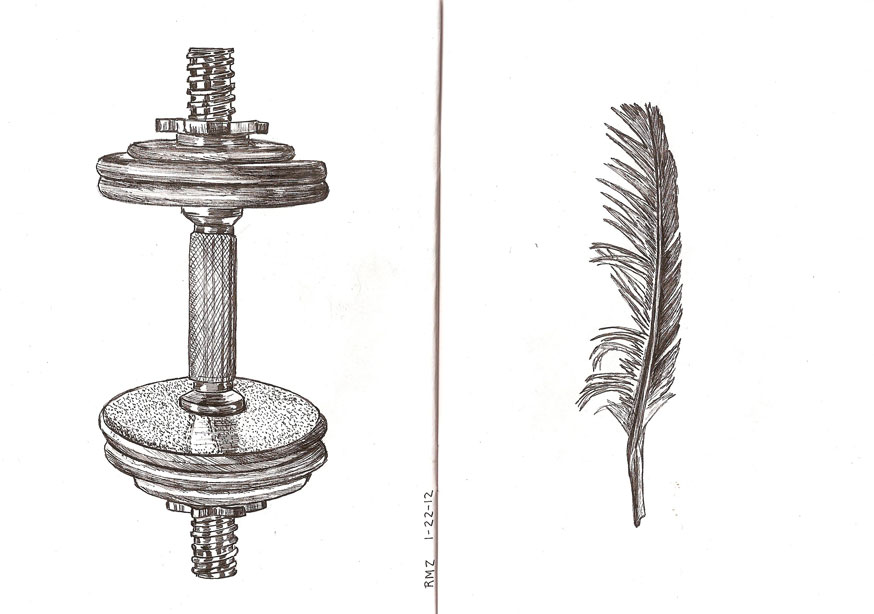
Today we ask you to become more sensitive to what is light and what is heavy energetically.
This corresponds to what some call “high-vibrational” and “low-vibrational.”
In general, it is good to cultivate light energy, and to limit one’s exposure to denser energies.
It is like in the periodic table of elements. The heavy elements — like uranium, and plutonium — are radioactive, and toxic. Likewise, heavy energies are toxic; which is why one must limit one’s exposure to them.
Light and love are the same. So all light energies are rooted in love. Love, joy, freedom, beauty, honesty, playfulness, innocence, harmony, generosity, compassion, tolerance, gentleness, togetherness — this is the feeling of “light.” A balloon floating in the breeze — that is light. Light is laughter, and fun. Light can also be expressed in tears of joy, or awe at something profoundly beautiful.
Dense energies are the opposite. Density is linked to fear. Fear, hatred, anger, greed, lies, slavery, selfishness, guilt, violence, cruelty, abuse, prejudice, intolerance, divisiveness — these are all dense. If light is the balloon that lifts us up, density is the heavy lead weight chained to our necks, dragging us down.
All life’s dramas occur in the dualistic interplay between the light and dense forces.
Everything you interact with in this reality resonates at a particular energetic frequency. Some things are very light, and some things are very dense, and most things fall somewhere in between.
So, as you take in experiences, it is good to be sensitive as to whether this experience feels like it is making you feel lighter, or heavier.
It is a subtle feeling, but as you become more conscious of it, you will be more sensitive.
Sense what the predominant frequency of the experience is. Is it light, or is it heavy? It may be neutral, but usually it will tip in one direction or the other.
If you wish to enjoy your life experience more, it is good to cultivate light energy in your life as much as possible.
Light energy is warm, vibrant, and expansive. It brings a smile to your face. Your eyes light up with joy. You feel lighter around light experiences.
Dense energy is either uncomfortably hot or cold. It is murky, and constrictive. One feels miserable around it. It makes you feel heavy.
People sometimes call these energies “heaven” and “hell.” However, heaven and hell exist in this reality. They are states of mind that project themselves into the external world.
Thus light consciousness creates heavenly environments — cathedrals, gardens, beautiful works of architecture, soul-stirring music and art. All great works of art are born of light consciousness.
Conversely, dense consciousness creates hell on earth: wars, genocide, senseless destruction, pollution, vast unspeakable human misery.
That said, dense consciousness can be very tricky. It will not show itself as hell-creating — not at the start. It will often pretend to be the Voice of Reason, even as it speaks its fear-driven lies.
That is why you must learn to accurately sense and feel what it light, and what is dense. Your heart will tell you, even if your mind is fooled.
If you begin to ask: “Is this light?” and “Is this heavy?” — the answers will present themselves.
Whenever possible, go toward the light.

Today we ask that you be good stewards to the gift of life that has been given you.
Every one of you is infinitely precious. Most of you do not believe or feel this, yet it is so.
The life each of you possesses is like a garden. You are each given a little piece of ground to work with. No two gardens are alike. Each one comes with different soil, different seeds, and a different climate.
But every garden has the potential to be very beautiful. Seeds must be planted and watered. Weeds must be pulled. You must shine light on your garden, and make sure that it is loved and nurtured.
Every human life is like this. Every infant born is like this. No two gardens are alike.
Yet it is universally true for all gardens that they increase in health and beauty proportionate to the love and care that is given them.
It may be that your own parents did not know how to best love and nurture you, in all likelihood because their own parents did not know how to best love and nurture them. There is a great deal of confusion in your world, so there’s no use blaming anyone.
Right now, you have a garden. The garden that is You. And no matter how you were parented, this garden is all yours now. Maybe it is a bit dry and weedy. Maybe it could do with some watering and tending. The point is, work with what you have right now at this moment. There’s no use wishing you had a different garden. This is the one that is yours.
Be a good steward to your garden. Take care of your body. Exercise it, and feed it nourishing food. Let it rest, and relax. The body houses the mind. It is the soil in which the mind rests. If you want your mind to flourish, it is good to start with the body. Seeds will not grow if the soil is too dry and hard. Tending the body is like moistening and aerating the soil.
All that you wish to do in this lifetime — these are your seeds. Some may already be planted, some you may have yet to plant. If you wish these seeds to grow into strong plants, you must tend the soil well. The soil is You. That is why it is essential to be loving and nurturing with yourself. Every gardener knows that there is a great deal of love and care that goes into a beautiful garden.
Do not expect to transform your garden all at once. Do not become paralyzed or disheartened because it seems like too big a task. Just start somewhere. Take one little corner of the garden, and work with that. All beautiful things are created little by little, piece by piece. They do not appear all at once.
The main thing is just to do a little bit every day. In this way, all seeds sprout. A little every day, with water, light, and good soil.
Tend yourself like a garden. Be good stewards of the gift of life.
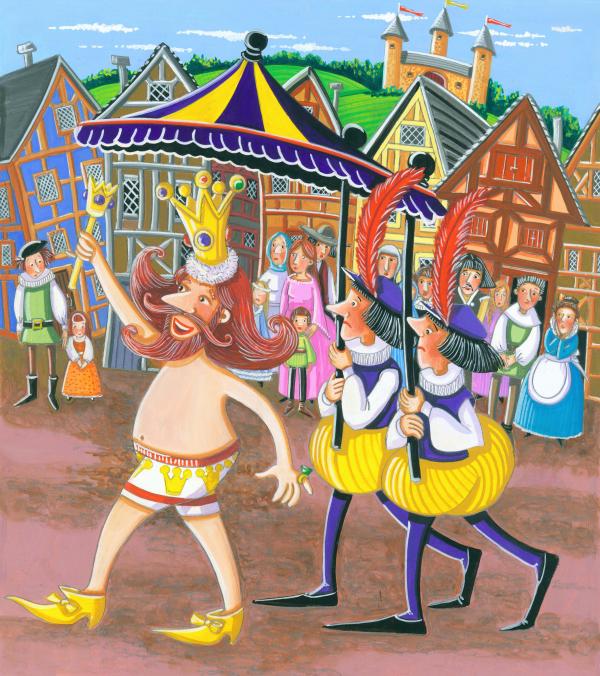
Today we ask that you question the belief systems of others.
When you watch the news, or read articles, or even take in the opinions of your opinionated friends, there is often a tendency to believe what you hear. This is particularly true if the voice is authoritative — if it is an “expert,” or someone rich and famous, or someone in your life whose approval you seek.
However, please know that when people talk about “the way things are,” most of the time they are completely wrong.
For the most part, you are never being presented with absolute facts. You are being presented with stories. With fiction. Someone is telling you a story about reality, as they perceive it from their point of view. Of course, someone with a different point of view will perceive reality completely differently.
So a color-blind person might look at the color red and say with absolute conviction: “That is gray!” The only reason you do not believe him is because you live in a world where most people see color and believe red is red. If you lived in a world of color-blind people, you would also call “red” “gray,” and you might even believe there was something wrong with your eyes for perceiving the color red.
Almost all the “facts” you hear are just beliefs and opinions. They are completely subjective. There is no way to prove the truth of any opinion.
So please do not be so credulous when someone says to you: “This is how it is!” Everyone has opinions. They will tell you what to do with your money, with your health, with your career, how to parent your children, what to watch and read, who to vote for, what to be afraid of.
Do not just believe these stories without question. You must go within and discover how other people’s beliefs resonate for you as an individual. When you hear someone telling you something, does it make you feel peaceful and calm, or tense and agitated?
On the whole, it is good to trust voices that come from a place of peace and calm. Voices that help you feel peaceful and calm. These are the voices to listen to. Voices that come from a place of love.
But when the voices speak of fear, and create agitation and discord — this is a sign that you are listening to a voice that must be seriously questioned. When the voice makes you feel agitated and nervous, take anything it says with many grains of salt.
Sometimes people’s opinions are terribly virulent and destructive. Wars are fought over opinions. Millions have been slaughtered over opinions.
That is why it is essential for you to learn to question the opinions and beliefs of others. That is how humanity can begin to wake up out of delusional thinking, into clarity.

Today we ask that you look at the people in your life.
What kind of energy do you surround yourself with?
Do you have people in your life with whom you feel you can truly be yourself? Open, unguarded, relaxed? People with whom you are at ease?
If so, cherish such people. You are very fortunate.
Do you have people in your life who are very lit up? Vibrant people, creative people, inquisitive people, tolerant people, reflective people, courageous people, loving people. People who are not particularly penned-in or suppressed by societal expectations, but rather express themselves freely.
If so, you are very fortunate. Cherish these people in your life. Nurture these relationships, as you would beautiful plants in a garden. Honor and appreciate such people. They are gifts to you, and the world.
You may be surrounded with people whose light is much dimmer. Fear-based people. People who are very preoccupied with normalcy and fitting in. Close-minded people. Judgmental people. Angry people. Negative people. People who cannot accept you as you are. People you cannot be yourself around.
Sometimes it is unavoidable: there is no getting around such people. It is okay if you have many of them in your life. Perhaps it is your place to shine a light for such people.
However, as a rule it is much easier to thrive when you spend time with individuals whose spirits are light. And if your energy is low and fragile, negative people can be very toxic.
If your psychic immune system is weak or vulnerable, it is a very wise practice to spend time around vibrant, lit-up people. You do not need to do this directly. You can read their books, or interact with them in indirect ways. You do not need to know them personally.
If your psychic immune system is weak, it is also wise to closely monitor your interactions with negative people. Try to limit your direct exposure. Also, avoid negative consciousness on TV or the internet.
This does not mean, shun negative people, or cut them out of your life. It just means be conscious of your energetic strengths and vulnerabilities around such people.
Cultivate meaningful and healthy relationships in your life. Cultivate any true friend, who loves you for who you are. One true friend is better than ten thousand false ones.
Honor the vibrant people in your life.

Today we ask that you look at the ways in which you experience shame.
For the most part, the experience of shame is not useful in any way.
It is one thing to feel a sense of remorse when one has consciously or unconsciously brought about harm to another being. This feeling can be useful, in the sense that it is useful to make amends with someone you have harmed.
However, most shame is not useful. Most shame is in fact quite toxic — for it essentially a negation of life. One feels ashamed of one’s self. One feels ashamed of others. This is actually a terribly violent, harmful energy.
This kind of existential shame negates life. It says: “I should not be this person. I am ashamed of who I am.”
This form of shame leads to great harm. Parents who feel existential shame inevitably project that shame on to their children. Parents feel ashamed of their children, just for being who they are. Healthy children become stunted in a shame-based environment, like plants sprayed with a toxic substance. They do not know why their parents always seem ashamed of them. They do not understand that it is because the parents are ashamed of themselves. So the children ingest this toxic idea that something is wrong with them on an existential level. They grow up with this belief. If they do not liberate themselves from it, they will in turn spread it to their own children, and the cycle will continue.
Please know that you have nothing to be ashamed of.
You are intrinsically good, and deserving of love. There is nothing you have done or not done that changes this in any way.
Shame kills people. This is so. Most suicides are a result of shame. Many people suffer physical and mental illness because of shame. People are cut off from the life force because of shame. They do not feel worthy of life itself; and so, through the power of their subconscious minds, they actually block life energy. This can be a cause of chronic sickness — like chronic fatigue, or autoimmune disorders. Autoimmune disorders are literally a case in which the self attacks the self. An overpowering sense of shame is very often one of the root causes of these terrible afflictions.
If you feel remorse, make amends.
Beyond that, you have nothing to be ashamed of. Truly, you have nothing to be ashamed of. Let go of your shame. Let go of your shame.
Know that being ashamed of yourself does not make you a virtuous person. Quite the opposite. People with a strong sense of existential shame often project shame onto other people. In the case of parents who do this to children, it is terribly damaging. There is absolutely nothing virtuous about it.
Again, this is not to say you should be an insensitive, uncaring person. Far from it!
Having a healthy self-regard will not make you into a jerk. Jerks do not have a healthy self-regard.
Having a healthy self-regard just means knowing and owning that you are good, lovable, and deserving of all the life force that is bestowed upon you. You feel no existential shame, but know that you are good because life itself is good. Such a being is in all ways a blessing to her fellow men. She accepts herself, so therefore she accepts others. Everyone feels good around such a person.
Do not carry around a heavy burden of shame. If you need to make amends with someone, do so. The rest you must let go. (And maybe it is yourself you need to make amends with.)
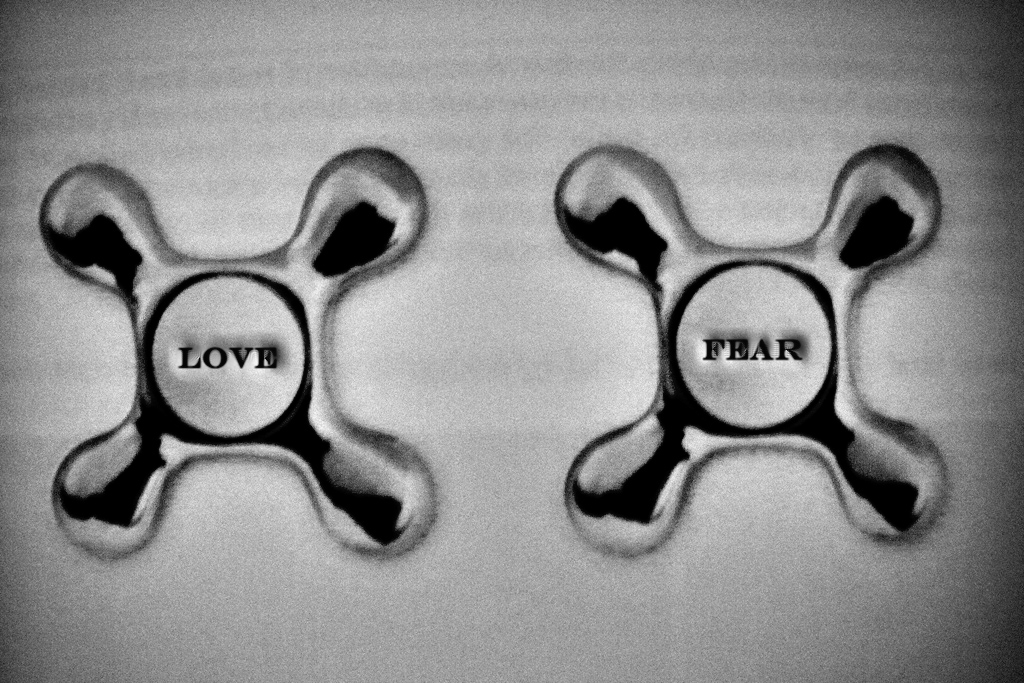
Today we ask that you look at the choices you make, and consider whether these choices lead you towards love, or fear.
Ultimately, every action you undertake is rooted in love or fear. Often there is a mixture of both — a confused muddle of motives. But one will be the primary motive.
Do you work because you love what you do? Or do you work because you fear what would happen if you didn’t work?
Are you in a relationship because you love the person you are with? Or are you in a relationship because you fear being alone, or fear the loss of security being alone would bring.
Do you parent your child from a place of love, or from fear for the child’s future and potential integration into society? Do you love your child for who she is, or fearfully impose your needs on the child?
Even the smallest choices are based in love or fear. Do you eat the food you eat out of self-love, or because of a kind of fear — drinking caffeine because it energizes you so that you can force yourself to work more, for example?
Do you exercise because you love how it feels to your body, or because you fear gaining weight or experiencing physical deterioration?
Again, the question is what is the primary motivation. Is the primary motive love, or fear?
The problem is, the fear path never leads you to a good place. It will never give you what you really want.
Because what you really want, of course, is love. Everyone wants love.
But making decisions out of fear always leads you away from love, not toward love. This is always true. When you do things out of fear, you are leading yourself further and further away from what you really want — which is love.
So when looking at your decisions, be very honest with yourself. How many of your choices are fear-based? If the majority of your choices are fear-based, then your life will be full of suffering. That is the tragic irony of fear-based existence. You believe that fear-based decisions will ease your suffering, because they temporarily make you feel more secure. In reality, they only increase your suffering.
If you truly wish to suffer less, then live life from a place of love. Love yourself. Do what you do from a place of love, not fear. This does not mean you need to radically change your life. It does mean that you need to consciously shift your primary motivation for doing what you do from a place of fear, to a place of love.
All myths, stories, and fairy tales deal with this central conflict between love and fear — showing characters who must face their fears, and act from a place of love and authenticity. When they do, they meet with a happy ending. When they give into their egocentric fears and make poor decisions, they may suffer a not-so-happy fate.
Which ending would you like for yourself?
 wordfromthewell