why patience is a virtue

Today we ask that you have patience.

It is said that patience is a virtue.  But most people do not really believe this.

Many people believe that you need to scream and complain to get anything done.  The minute you experience a feeling of impatience, it’s time to shout and complain to get things moving.

This is, of course, what little children do.

But these days many little children never outgrow this habit.  Why would they, when they experience their parents’ continual impatience with the world?  Children can only learn what they are shown.

You live in a remarkable time, in which information and entertainment are accessible at the touch of your fingers.  You live in a time of overnight deliveries.  Press a button, and almost whatever you desire is yours!

This is a wonderful power, and a gift.  But like all gifts, it can be misused.

When “fast food” came into the world, it was hailed as a major breakthrough.  At last, people didn’t have to waste time preparing food.  It was plentiful, and cheap.  It was only over time that its harmful effects became clear.  As a response, the “slow food movement” began.

New things are intoxicating.  But everything must have its place, and be in balance.

It is possible to be as gluttonous with information, entertainment, and overnight deliveries as it is with fast food.

Mainly, observe if these modern conveniences are having a corrosive effect on your overall patience level.

It is the natural flow of things that humans become more patient with age.  Small children are very impatient, but as people mature and grow up, they cultivate the skill of patience.

If you feel like you are becoming less patient with age, notice this.  If you feel like you are about at the same level of patience/impatience, and are not becoming more patient with time, notice this.

Being patient does not mean you are a doormat.  It does not mean you won’t get what you desire.

Screaming and complaining will never get you what you truly want in life.  It will only cause people to dislike and resent you, and will have harmful effects on your physical health.

Seeds need time to grow.  You cannot hasten the growth of a seed by shouting at it.  In fact, shouting at a seed will actually slow things down.

Using chemical fertilizers, or tampering with a seed’s genetic code in order to hasten growth will create long-term problems.  

Be patient.  Be patient.

Seeds can only grow so fast, and still be healthy.

If you wish to create something new in your life, it is wise to think of it like planting a seed.

Yes, you must water it and tend it and make sure it has good soil and light.

But mainly, you must patiently wait for the magic to happen.

What happens if you get impatient?  You might do something very foolish, like checking on the seed’s progress by digging up the soil.  You might damage or kill the seedling in doing so.

Yet this is precisely what so many people do.  Like impetuous children, they cannot leave well enough alone.  They must “check on progress,” and “manage the situation” — until they manage the situation right out of existence.

Parents can do harm to children by being impatient.  Every child is unique, and must grow and learn at his own pace.  Attempting to hasten the process to make sure one’s child is “keeping up with developmental markers” can backfire, and actually impede growth and learning in the long term.

So please cultivate patience in your life.

You will find that a patient attitude actually helps things to take far less time in the long run.  Impatience will always waste your time, and make everything take longer.  
what kind of messages are you sending?

Today we ask that you consider the messages you send into the world.

Humans send messages all the time, whether or not they are texting, emailing, posting, tweeting, or blogging.

Most of these messages are unconscious.

A message is simply a form of communication.  It may be verbal, or non-verbal.  People send messages with body language.  On an energetic level, people send messages with their thoughts.

Humans are like radio stations.  You are always broadcasting.  You may have a strong signal, or a weaker signal.  But you have a signal, and you are broadcasting.

The question is, what are you broadcasting?

Are you sending messages of love, appreciation, encouragement, and acceptance?

Or are you sending messages of fear, judgment, dissatisfaction, and rejection?

All of you have great power in this regard.  The messages you send are very powerful.

Consider the power adults have over children.  Children are profoundly influenced by the messages they hear from adults.

Consider the power of the media.  People are profoundly influenced by the messages they absorb on the internet, television, and in films.

Consider the power of therapists, and teachers.

Consider the power of clergymen, preachers, gurus and lamas.

Consider the power of anyone who runs a business, and employs people.

Consider all the messages you take in each day.

Consider all the messages you send each day.

Do you send messages of love, acceptance, encouragement, and appreciation?

Do you send messages of fear, judgment, dissatisfaction, and rejection?

The messages you send have power.  Not only over others, but yourself.

You will believe the messages you send.  You will live by those messages.

So just consider an average day in your life.

Are the messages you send into the world peaceful, and encouraging?

Are the messages you send into the world fear-inducing, and discouraging?

Your messages have a certain feeling tone.

Someone who sends out constant messages of attack, criticism, judgment, discouragement, and rejection will project a feeling tone that many people will find unpleasant.  Children and animals will instinctively avoid such energy.

This is not a judgment; merely an observation.

Someone who sends out messages of love, acceptance, encouragement and appreciation will project a feeling tone that many people find pleasant, especially children and animals.  Many doors will open to such a person.

So just begin to pay attention to the messages you send, both verbally and non-verbally.  Do not judge yourself.  Just observe.

And then perhaps make a conscious effort to send out more loving messages today.

You will find that this will create well-being and joy in your life experience.  


how to make choices

Today we ask that you learn to make high-vibrational choices.

What does this mean?

In life, you are constantly faced with choices.  They may be small choices, like what to eat, or what to wear.  Or they may be major choices, like what career to choose, or whom to marry.

Such dilemmas can be very challenging.

When faced with such a choice, it is good to focus in on the vibrational frequency of each potential path.

A very broad example would be:

You must choose between eating a heavy, processed dessert, or fresh organic fruit.

Clearly in this case, one choice is more high-vibrational than the other.  The pull toward the heavy, processed dessert is coming from a compulsive, addictive place.  You know it will not make you feel as good as eating the fresh fruit.  So even if it may be a tough choice if you are experiencing cravings, the high-vibrational option is clear.  

Many choices are like this, where one path is clearly more high-vibrational, or healthy, than the other.

Other choices can be more subtle.  Perhaps you must choose something to wear.  These choices may vary from day to day.  Some days it is very important for the body to be in loose, comfortable clothing.  At other moments you may wish to adorn yourself in a way that is distinctive to your personal energy, that may be somewhat less comfortable.

The main thing here is to look at your motivation.  Are you wearing what you wear as an expression of self-love, or fear and insecurity?  Are you wearing things that cause you pain and discomfort in order to “make yourself more desirable”?  That is not a high-vibrational choice.

Sometimes you do not have enough information to make a clear choice.  That is why it is often wise to get a “second opinion” in the case of a medical diagnosis.  Sometimes you are not aware of alternatives that may be more high-vibrational, so seeking counsel from different points of view can be useful.  Often if you are feeling stuck in a dilemma, it is because you require additional information.

Other times, when you are stuck, it is because of the Voice of Fear.  You actually do have a sense of the path, but the Voice is Fear undermines your resolve.

This can often be the case when you wish to leave an unhealthy situation, like a job or relationship that is not harmonious for you.  You know the high-vibrational path, but fear blocks the movement.  You talk yourself out of it.

Sometimes it is good to do this exercise:

I choose to do ___________ because I want __________.

It is good to write this down.

For example:

I choose to go on this vacation because I want to relax.

Relaxation is usually a high-vibrational motive.  Just make sure that when you go on this vacation, you really do allow yourself to relax!

Another example is:

I choose to return my mother’s call right now, even though I am busy and stressed, because I want to not feel guilty or make her mad at me.

That is not a high-vibrational motive.   Little good will come out of such a call.  You will be tense, resentful, and distracted.  Your mother will not truly benefit from this interaction.

This exercise will help you examine your motives.  Looking at your motives can help determine the high-vibrational choice.

There is no need to become neurotic about this.  While following this practice can improve your well-being, you must know that you really cannot go wrong in this life.

Also, there are many events on your life path that are foreordained — agreed to before you were born, that is.  These events will unfold non-causally.  That is to say, your decisions have no impact on these events.

You may think of this as similar to playing a board game.  Though you roll the dice, and make choices, you are on a set path to some degree, and will sooner or later hit certain markers.  You will all end the game in physical death.  That is certain.

While certain events on your path are fixed, in the realm of the day-to-day there is more fluidity.  Making high-vibrational choices will create far more enjoyment around the life experience.

On one hand, it is very wise to take actions mindfully, and consciously.

On the other hand, it is wise to let go and relax, and trust that everything is unfolding perfectly.

In between these lies a very happy balance.

physical therapy for your emotionsToday we ask that you become conscious around your vulnerable areas, or “triggers.”

Everyone has “triggers.”  A trigger is an area of the emotional body that is inflamed, and thus prone to emotional pain and hypersensitivity.

It is similar to experiencing physical inflammations and weak areas.  Most of you have experienced physical injuries that require you, for a time, to be much more conscious around the injured area.   You might have a sensitive joint, or back pain, or you may have recovered from surgery.  

In the case of physical inflammation and injury, the foolish thing to do is to ignore the pain and “push through.”  You will only aggravate the injury.

The wise course of action is to become extra-mindful around the injured area, and take intelligent action to rest, nurture, and strengthen the weakened part of the body.

The emotional body is really no different from the physical body.  You cannot see it, but you certainly feel it.

You know you have an injured emotional body when something fairly mild or innocuous triggers an intense emotional reaction.  

Your spouse makes a comment.  You read a post on Facebook.   You open a bill.  Your parent leaves a message asking you to call.  Suddenly, you are in a heightened emotional state.  You feel anger, or anxiety, or hopelessness.  Nothing has really happened, but your emotions are going through the roof.  

Instead of pushing through or suppressing the strong feeling, the wise course of action is as follows:  you do not impulsively react to the stimuli.  You do everything you can not to fire off the angry email or scream at the customer service representative or snap at your partner.   The immediate thing to do is simply calm yourself down.  Count ten slow breaths.  Go for a walk.  Do some physical exercises.  Get the emotional spike down to a manageable level.  

Once you are calmer, you take note of what just happened, understand that you’ve just located a trigger point, and make a plan to take action to nurture and strengthen this injured area later on, when you are in a safe space.  

How can this be done?

The physical body is healed through a combination of rest, and therapeutic exercise.

It is the same with the emotional body.

If the emotional body is injured, you must rest it, and do therapeutic exercise.

The emotional body is exerted in all situations of heightened emotion.  This includes emotions you experience taking in news and social media, and watching fictional dramas in movies and on TV.  If your emotional body is inflamed, it is wise to reduce these sources of stimuli, so that the emotional body can rest.  

If your emotional body is inflamed, you must also exercise caution around people you know to be especially triggering for you.  Attempt to limit your exposure to triggering individuals as much as possible, during the “rest” period.

Once you have rested, then you may engage in therapeutic exercise for the emotional body.  This takes the form of questioning your belief systems.  

If the skeleton, muscles, and nerves are the building blocks of the physical body, your belief systems are the building blocks of your emotional body.  

A belief system is simply a body of beliefs about something.  It is what you were taught in childhood, and what is reinforced as an adult by the people around you, the media, and the voice inside your own mind.  

You might have a belief system around money, for example, that tells you that “Responsible people are frugal,” “Money is hard to come by,” “Rich people are corrupt,” etc.  

So — if money is a big trigger for you, sit down and write down all your beliefs about money.

If work is a big trigger for you, write down all your beliefs about work.

If romantic relationships are a big trigger for you, write down all your beliefs about romantic relationships.

One by one, questions these beliefs.

Under your original list, rephrase your statements are beliefs.

For example, if you wrote down “Money is hard to come by,” now write down “I believe money is hard to come by.”

Just writing things down in this way will show you that your beliefs are simply beliefs, not hard facts.  

With each belief, ask yourself: “Can I absolutely know that this is true?”  Be honest.  It’s okay if your answer is “Yes.”

Write down the opposite of the original beliefs.  For example, “Money is easy to come by.”  Think of situations where this may have been true for you, or other people.  Really sit with this.   Write down examples.  

It’s also important to notice and acknowledge the emotions that arise as you work with these beliefs.  Pay attention to beliefs that are very triggering for you, that you have difficulty loosening.  Think of these beliefs as injured muscles that are going to really require some extra attention.  

The Work of Byron Katie is an excellent tool for inquiring into your belief systems, especially around the people in your life.

These kind of exercises may appear to be time-consuming, but they will ultimately save you a vast amount of time and energy lost in emotional pain and reactivity.

Just as an injured physical body requires physical therapy, and injured emotional body requires emotional therapy.

Work with a therapist can of course be invaluable in these matters.  However, any course of therapy that does not address your underlying belief system will be of limited effect.  In fact, rehashing trauma over and over again, without addressing the underlying belief system, can sometimes keep an old emotional injury inflamed.  There is a fine balance required — of addressing and treating the injury, without simply keeping it inflamed.  

Just as you know when an action brings your physical body healing and relief, you will know when an action brings your emotional body healing and relief.  There is a sense of relaxed strength around a body that works well.  

You will know your emotional body has healed when your triggers no longer trigger you, or perhaps only cause a mild twinge.  

Go easy on yourself.  Stay conscious.  Learn not to “push through.”  The sooner you acknowledge your places of vulnerability, the sooner your healing process can begin.  


you have a choice

Today we ask that you know you always have a choice.

Most people believe that they have no choice.

It is a story they tell themselves.

“I have no choice.  I was born to these parents and had all these bad things happen to me in my childhood.”

“I have no choice.  The economy is bad.”

“I have no choice.  I have children to support.”

“I have no choice.  I need to get drunk to let off steam.”

“I have no choice.  I was born into this religion.  Even though I don’t believe in it, my family would feel betrayed if I abandoned it.”

“I have no choice.  My boss will fire me if I don’t behave aggressively.”

“I have no choice.  The government says I must go to war.”

“I have no choice.  I am a slave.”

So people tell themselves.

“I have no choice.  I must do these things that are out of my integrity, that make me feel bad, that cause harm to my body, that cause harm to other people.  I have no choice.”

Of course, this is not true.

You have a choice.  You always have a choice.

In fact, choice is what defines this reality.

You live in a dualistic reality.  Everything is separated into two poles:

Up/down.  Left/right.  Black/white.  Male/female.  Good/bad.  Pleasure/pain.  Light/dark.  Past/future.  And so on.

Even on the subatomic level, your reality is dualistic.

Not all realities are dualistic.  Most universes are not.  You would find non-dualistic universes strange.  But the inhabitants of other universes would consider your dualistic universe quite strange.

Since you live in a dualistic reality, you are constantly asked to make a choice.  

Though the choice may present itself in countless forms, really there is only one choice.

There are many ways to describe or define the choice, but if you look you will see that it is the same thing:

Love, or Not Love (Hate/Indifference).

Union, or Separation.

Heaven, or Hell.

Life, or Death.

Light, or Dark.

Evolution, or Devolution.

Creation, or Destruction.

Acceptance, or Rejection.

Forgiveness, or Condemnation.

Do you follow the pattern?

There is no value judgment around the poles.  The “Dark Side” has its place in your reality.  Death and destruction have their necessary place.  It is all part of the great balance.

But the choice has enormous ramifications for your individual life.

At every single moment, consciously or unconsciously, you are making a choice.

You are choosing love, or you are choosing to reject love.  You are choosing Heaven, or Hell — not in the hereafter, but right now you are living in Heaven or Hell.  You are choosing to create, or you are choosing to destroy.

It is the Voice of Darkness that tells you that you do not have a choice.

That is what Darth Vader, and Voldemort, and Sauron, and all the Dark Side archetypes always say: “You do not have a choice.”

The Voice of Light will always make it clear that you do you have a choice.  It cannot force or compel your choice.  You must make it.

You have a choice.

If anyone tells you that you do not have a choice, know this to be the Voice of Darkness.

It is okay to go down the Dark Path.  Truly, this is so.  No one goes to Hell forever.  It is only in this place that people experience Hell.  And redemption is possible at every moment.  It is never “too late.”

Hell is just separation from the Divine.  Or rather, it is the illusion of separation, since true separation is not possible.

Hell is an illusion.  But it feels bad, nonetheless.

If you desire to feel good in your life, it would be wise for you to choose the Light Path.

The Light Path may involve short term discomfort, but will give you long term peace.

The Dark Path may involve short term comfort, but will give you long term misery.

Every story, every myth, every tale ever told tells some version of this.  That is because it is true, in this reality.  It is as true for you as it is for fictional characters.  

If you wish to be happy and at peace, do not listen to the Voice that says “You have no choice.”

You always have a choice.  Remember this.

Choose wisely.

why you're not batmanToday we ask that you conserve your energy, and not waste it.

The primary way in which humans drain energy is by attacking themselves and others in thoughts, words, and actions.

It is quite staggering, if you consider the matter.

Consider how much energy you absorb each day that is some form of attack on someone else.

That includes all forms of gossip, whether heard in a conversation, or on the news or internet.  If you are hearing about something second-hand or third-hand about what some other person did that merits your judgment and condemnation, you are participating in an attack.

Celebrity gossip, as innocuous as it may seem, is largely an attack.

Even well-meaning people who are compelled to publicize the actions of “evil” individuals or corporations are participating in an attack.

Participating in attacks, even passively, drains your energy.

We cannot overstate this.  Participating in an attack against another life form, no matter how justified that attack may appear to be, is draining your vital energy.

The objection that usually arises around this is as follows:

If you do not publicly shame, condemn and attack individuals and corporations that are involved with what you believe to be wrong-doing, how will justice be served?  How will society be protected?

Here is the answer:

It is not your function to protect society.

It is your function to create.  You are here to create.

Not destroy.

You are not here to destroy.  You are here to create.

When you passively or actively participate in an attack against others, you are engaging in a destructive act.

That destructive energy always boomerangs back against the self.

Always.

If you want to create anything, you must stop destroying.

You must stop participating in destructive, attacking energy in your thoughts, words, and actions.

Justice is not your concern.

As hard as it may be to accept this, justice is not your concern. 

That is because you are not capable of understanding the bigger picture of your reality.

Rest assured, there is no injustice.  If you could perceive beyond your limited perspective, you would see that there is absolutely no injustice in reality, no matter how things may appear to you.

That is why it is not your place to mete out justice, judgment, and condemnation.

It is your place to create.  You are meant to create joy, light, love, harmony, and beauty.

The more energy you devote to destruction, the less you have available for creation.

It is a very simple equation.

The more energy you devote to destruction, the less you have available for creation.

So consider carefully how much energy you spend each day in attack, of the self or others.  The two are closely connected, of course.

If you attack others, you will attack yourself.  Not only that, but you will attack yourself more than you attack others.

However much time and energy you spend in the attack of others — and that includes passively absorbing attack energy via  the news or social media — please know that you will inevitably attack yourself even more.  The two are directly correlated.

The less you attack others, the less you will attack yourself.

If you stop attacking others altogether, you will no longer experience self-attack.  This is absolutely true.

And that is when you will really be able to create.  

If you wish to create, you must cease engaging in acts of destruction.

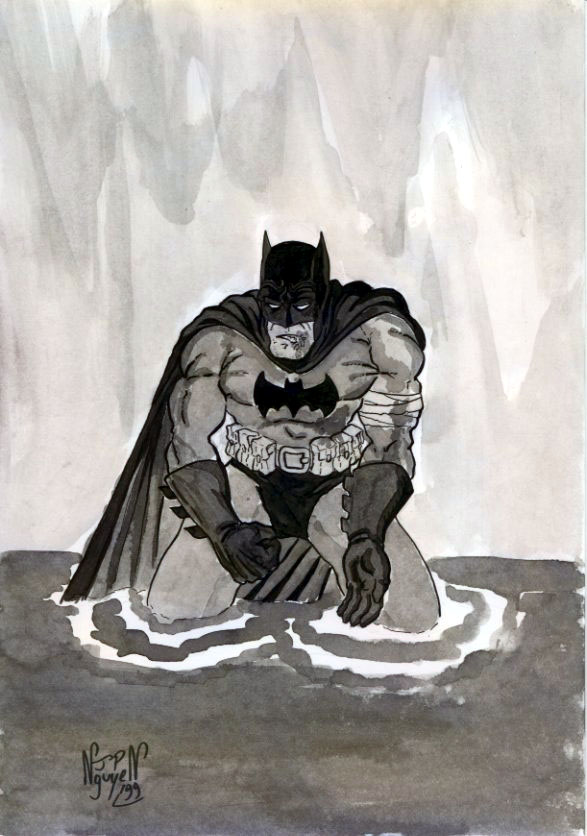
It is not your place to mete out justice, or protect society from evildoers.  You are not a comic book superhero, you are not Robin Hood, you are not a noble vigilante.

And if you look at the archetypal tales told about such figures, you will see that they experience a great deal of suffering, and often cause more harm than they do good.  

Justice is not your concern.  You are not Batman.  Leave justice to a higher power — for your own good.

If you wish to create, you must stop destroying.

drop your baggage

Today we ask that you enter new experiences with presence and clarity.

What does this mean?

Most people enter all new experiences carrying a lot of baggage.  They are neither present, nor clear.

Children enter new experiences with presence and clarity.  Each day is greeted with excitement.  There is so much to see and do, so much play.  That is why it is hard for them sometimes to take naps, or go to sleep at bedtime.  They are having too much fun.

Most adults do not greet the day with such excitement.  The new day is a day of chores to be slogged through, unpleasant tasks to be done.  They awaken in the morning, and right away their minds start running with worry and fear.  They have difficulty falling asleep for the same reason.  It is worry and fear that keeps the adult from his bedtime — not joy and fun.

What happens to people, between childhood and adulthood?

They lose their presence.  They collect “baggage.”

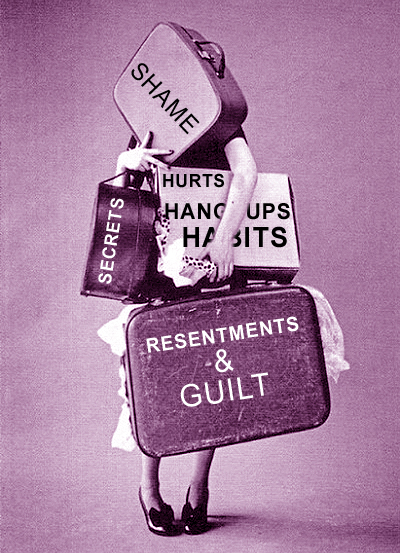
Adults walk around burdened by all their baggage.  It is literally like walking around carrying heavy luggage.   You cannot really focus on new experiences, because you’re so preoccupied with all this heavy baggage you’re dragging around.

The baggage also prevents you from understanding why it is you do the things you do.  You are so preoccupied with your baggage, that you really don’t know what you are doing, much of the time.  That is why whole weeks will go by, and you have no idea what happened, where the time went.  

You were so busy lugging around and tending to your baggage, that you paid little attention to anything else.

Imagine you are traveling to a new city.  But you must carry many bags of heavy luggage with you, everywhere you go.  You cannot leave them in the car or hotel.

What would happen?  The traveling experience would be quite miserable, wouldn’t it?  You really couldn’t enjoy anything, because you’d be so preoccupied with taking care of all your baggage.

This is the predicament most people are in.

Baggage is really a symbol for history.

What is history?

History is, in essence, your story.  

More specifically, your history is your narrative recounting all your grievances and traumas, your victimhood, your failures, your condemnation of yourself and others.  It is the narrative that recounts all the ways life has been unfair to you, and how you and others have failed to live up to expectations.

That is your history.  That is your baggage.

That is what you drag into every new situation.  Like the foolish tourist who lugs around many heavy bags with him everywhere, your baggage prevents you from enjoying your life experience.

Drop your baggage.  Let go of your history.

This is extremely difficult, for most people.

They hold on to their history for dear life, as if it were precious.  They polish their stories of grievance and victimhood like jewels.  They nurse their judgments of themselves and others like beloved babies.  

It is madness.

Really, if you opened up that luggage, you could see that all you are dragging around is heavy junk.

Enter into new experiences with presence, and clarity.

When you meet an old friend, pretend it is the first time you are meeting this person.

As you travel through familiar haunts, pretend you are a tourist, who has never seen this place before.

Wake up.  Drop your baggage.  Pay attention to the world around you, to life as it is happening.  Know why it is you do the things you do.

Really, all that is required for you to enjoy and appreciate your life right now is for you to drop your baggage.  Drop your history.

And if you feel that you cannot do this, ask yourself: “Why?”

Why can’t you drop your baggage?

What will be lost, if you do?

Is it really true, that you will lose something precious?

In truth, all you will lose is a heavy burden.  And you will gain so much more.  You will gain joy, and presence.

It is your choice.

think less, do more

Today we ask that you stop overthinking.

Overthinking is a major energetic block for most people.

Humans aren’t born overthinking.  It’s a learned process.  A bad habit, really.  It’s a good thing that humans aren’t born overthinking.  If babies and toddlers thought too much, they’d never learn to walk or talk or do much of anything.

Children are taught to overthink, by overthinking adults.  It’s like a neurological computer virus that spreads from mind to mind, and makes the human consciousness quite buggy and inefficient.  Like a slow computer.

Overthinking means you are continually at war with a Voice in your head.

You wish to do something.  The Voice gives you reasons why you shouldn’t do that thing.  Usually fear-based reasons.  You become paralyzed, tentative, uncertain.

Imagine if a robot were programmed to overthink every decision.

If you commanded the robot to, let’s say, pick an object up off the floor, a simultaneous counterprogram would tell the robot not to pick the object off up the floor.  

The poor robot would be paralyzed.  Steam would come out of its ears.  

This is the state many humans find themselves in.  They want to do something, but at the same time they do not want to do something.

As soon as they contemplate an action, a fear-based countering Voice tells them all the reasons why they should not take this action.  In order to do anything, they must first argue with, and defeat, the countering Voice.  A huge amount of energy is wasted in this process.

Stop overthinking.

Notice how often you overthink.  How often you contemplate taking an action, then meet with a countering Voice of fear and resistance.

“I would like to meditate.”

The Voice counters: “You don’t have time!”

“I would like to travel.”

The Voice counters: “You don’t have time or money!”

“I would like to be open to a new romantic relationship.”

The Voice counters: “You will only be hurt and rejected!”

Sound familiar?

This Voice likes to say that it is your friend, and is only trying to keep you safe.  But in reality, it is not helping you at all.  It is just wasting your time and energy.

It is only keeping you blocked, stuck, depleted, and paralyzed.

“Stop overthinking” really means “Stop listening to the Voice of Fear and Doubt.”

This is generally a process of unlearning.  You must return to a state of playful openness and curiosity that is much more child-like.  This is why children are capable of learning and advancing so rapidly.  They have not yet learned to be paralyzed by fear and self-doubt.

The first step in this process is just to notice how often you experience paralysis and indecision when it comes time to take an action.  How much mental arguing goes on?

On a scale of 1 to 10, how much would you say you overthink?

Please do not judge yourself, if you are an “overthinker.”  It is a learned habit.  Most likely you have been around parents, teachers, or other influential figures who have taught you that it is prudent, sensible and responsible to overthink everything.

Just make a commitment to think less.

This may sound counterintuitive, or even foolish.  But truly, if you wish for greater happiness and fulfillment in your life, you must think less.

If you think less, you will do more.

This is absolutely true.

If you think less, you will do more.

All athletes understand this truth.  Too much thinking is an impediment to smooth and flowing action.

Think less, and you will do more.

reset-button

Today we ask that you learn to “press the reset button” in life.

What does this mean?

Most of you possess computers and phones.  It is common that with regular usage over a period of time, most devices get “buggy.”  They cease to function well.  

One way to address this issue is to “reset” the device.  By returning the device to its factory setting, then reloading  programs and information on to it, the device usually runs more smoothly and efficiently.  

It is the same with humans.

As children, people are close to their “factory” setting.  Children come into the world with a playful, open, curious, lively, loving presence.

But over time, children pick many programs, or conditioned beliefs, that interfere with their healthy function.  By the time people reach adulthood and proceed into middle age, they are usually rather “buggy.”  Negative experiences and unhealthy programming have led them to all manner of neurotic, limiting, and self-destructive behaviors.

It is possible to press the “reset” button.

One way to press the “reset” button is to begin actively questioning your core beliefs and programs.  

Examine your beliefs about yourself, other people, relationships, society, money, religion, spirituality — all areas of your life, particularly those that are “buggy” for you.

The Work of Byron Katie is an excellent and simple method of deprogramming individual beliefs — in essence, hitting the “reset” button.

For example:

Perhaps you were taught to believe that “Responsible people must work very hard all the time.”

To question this belief, following Byron Katie’s method, you would ask:

“Is that true, that responsible people must work very hard all the time?”

Answer “Yes,” or “No.”

“Can I absolutely know that it is true that responsible people must work very hard all the time?”

Once again, answer “Yes” or “No.”  It is okay if the answer is “Yes.”

“How do I react when I believe the thought that ‘Responsible people must work very hard all the time.’?”

Notice any stressful emotional or physical reactions that arise as you sit with this thought.

Then ask: “Who would I be without this thought?”

Imagine who you would be, how you would feel in your body right now if you were someone who had never learned the concept that “Responsible people must work very hard all the time.”

Finally, sit with opposing statements:

“Responsible people must NOT work very hard all the time.”

“Irresponsible people must work very hard all the time.”

Can you find reasons why these opposing statements might be equally true to the original statement that “Responsible people must work very hard all the time”?  

Why might it be irresponsible to work very hard all the time?  Find as many reasons as you can why this might be true.  

If you really sit with this process, the original belief will lose its power in your consciousness.  You will hit the “reset” button on the belief.  You can do this with any belief.

You can also choose to hit the “reset” button on relationships.

You do this by choosing not to hold other people’s history against them, or hold your own history against yourself.

This is, of course, why people often have affairs, or split up old relationships to seek new ones.   They wish to be with someone new, with whom they have no “history.”  It is a way of hitting the “reset” button.

Unfortunately, this is at best a temporary fix.  For any new relationship will soon develop its own “history.”

You do not need to constantly seek out new relationships in order to drop your history and start over.

You can instead hit the “reset” button on any existing relationship by choosing not to hold someone’s history against them, or hold your history against yourself.

This is an extremely powerful practice.

Learning to “hit the reset button” will positively transform your whole life.

If your life is feeling buggy, hit the reset button on your beliefs, and your relationships.

It really is possible to start over, at any point.  You just have to believe that it is possible.  

shh.  learn to listen

Today we ask that you learn to listen.

It is a wonderful ability, listening.

Very few people can do it.

In order to be a good listener, you must be able to quiet the chattering voice of your thoughts.

You must be present, in the here and now.  You must not be lost in your imagined projections of future and past.

You must not “multi-task.”  You cannot check your email and listen at the same time.

Everyone loves a good listener.

Children always love adults who truly listen to them.  Very few adults truly know how to listen to children.  They are busy, and distracted.  They run their agendas with children.   Play cannot just be play — it must have a “purpose,” it must be a teaching exercise.

An adult who can truly listen to a child can just sit with a child, with no agenda.  Such an adult isn’t caught up in his thoughts and judgments, and so can play with a child with all the freshness and presence of a child.

Children adore such adults.

Animals, too, gravitate toward people who know how to listen to them.  To be a “Dog Whisperer” or a “Horse Whisperer” is really to be a Dog Listener, or a Horse Listener.

Animals do not communicate in human language, but they clearly communicate.  If you are a good listener, you will understand them.

It is the same with all things.

A good listener knows how to listen to his own body.  He can hear if the body is approaching exhaustion, or illness, and take action to honor the body’s needs — thus preventing further exhaustion or illness.  A good listener to the body sees physical symptoms not as annoyances or problems, but as useful information.

A good listener can hear even the plants, or inanimate objects.  If you are silent enough, you can hear the voices of the trees and stones.  All the old shamans understood this.

A good listener is also a good speaker.

How can you speak well, and truly communicate, if you cannot listen to other people?

And yet this is the absurd predicament most people are in.  Most adults are poor listeners, and yet cannot stop talking.  So this world is full of chattering people who aren’t really communicating.  They are merely talking to themselves.  Instead of a dialogue, you have two people delivering monologues at each other.  

In such an environment, people scream and shout to be heard.  They post on Facebook and Twitter to be heard.  Every few minutes, they broadcast their mental chatter to the world.

And still, they do not feel truly listened to.

If you are someone who does not feel like you are being heard, the most useful thing you can do is cultivate your own ability to listen.

Listen.  Listen to your body.  Listen to your soul.

Listen to the people around you.  Not what they are saying, but what is underneath their words.  That is the real gift — hearing what lies beneath other people’s mental chatter.  Usually it sounds something like: “I am afraid, and I feel unloved.”

If you become a good listener, all doors will be open to you.

Everyone loves a good listener.