Archives for category: Uncategorized

Today we ask that you look at something in your life that you really wish you could “take control of.”

All of you have areas in your life where you feel “out of control.”  

Perhaps it is your health.  Your finances.  Your children.  Members of your family.  Your love life.  Your job.  

Something that is a source of frustration and fear.  Something that you wish you could control.  But it is clear that you cannot control it.

As you hold this thing in mind, imagine that you are driving a car down a steep and winding road.  It is raining, and foggy.  You have difficulty seeing the road ahead.  You are frightened.  You grip the steering wheel tightly, fearful that you cannot control the car.  Fearful that something bad will happen if you cannot maintain control.  But you are losing control.  You are losing control.

Now: take three deep breaths.

And imagine letting go of the steering wheel.

Take your hands off the steering wheel.

Let go.

The moment you let go, something very curious happens.

The car drives itself.  As if it is on autopilot.  You do not crash.  Nothing bad happens.  The car continues to drive.

And other curious things happen.  The road straightens out.  You are no longer on a hill.  The rain clears.  The clouds part.  The sun shines through.

Suddenly you are going down a straight road, through a beautiful green landscape, on a sunny day.

As you look around, you realize that the car is on a track.  Like a car in an amusement park ride.  It has been going along on a track this whole time.  When you let go of the steering wheel, it simply continued along on its track.  You were never in control of the car.  It only seemed like you were.

So now you can just sit back and enjoy the ride.

Keep this in mind, as you dwell on those things you struggle to control.  Often the best thing is just to let go of the steering wheel.

Today we ask that you give yourself some time this weekend to rest.

When removed from the rigid structures of religious dogma, there is a certain wisdom in the concept of the “sabbath.”

All life forms require periods of deep rest and relaxation.  If you observe the behavior of animals, you will see that sleep is one of their primary activities, and that they really give themselves over to it.  One generally does not encounter animals with insomnia.

And yet humans, who are in part animals — certainly you walk the earth inside animal bodies — are forgetting how to rest.

Many of you exist in a state of continual stimulation — checking emails, Facebook, and so on.  Some of you “multitask,” with many forms of stimulation coming in simultaneously.  You drink caffeine to help you absorb all of this stimuli.

Your nervous systems are in a state of constant excitement.  You do not know how to rest.  

As a result, many humans are experiencing difficulty sleeping.  Others are succumbing to nervous exhaustion, which presents itself with a variety of symptoms, including chronic fatigue.

If anyone reading these words experiences such symptoms — insomnia, fatigue, headaches — then it is very likely that your body is dealing with nervous exhaustion as a result of continual overstimulation.

There is one sure-fire cure for these symptoms.  Humans in earlier time periods understood this, even if you do not these days.

Rest.

Humans must rest.

This is not just what happens in bed at night.  If you have exhausted your nervous system, there is still tension in your body when you sleep.  This may manifest as unpleasant dreams, or as waking up feeling tired.

You must rest your minds.

How does one do this?

By cutting down — or even cutting out altogether — sources of nervous stimuli.

We wish all of you would give your nervous systems a sabbath.

What stimulates the nervous system?

Television.  The internet.  Magazines.  Books.  Phone calls.  Social activities that revolve around talking and thinking.  Caffeine.

What relaxes the nervous system?

Being outdoors.  Doing gentle, grounding exercises.  Meditating.  Breathing.  Bathing.  Being around animals.  Taking naps.  Singing.  Dancing.  Playing.  Eating nourishing, yet comforting food.  Letting your animal body just be an animal body.

We understand that you live in a busy modern world.  But we implore you to give your nervous systems true down time on a regular basis.  You cannot overestimate the benefit this will have for you.  We tell you this out of love.


Today we ask that you stand back and take a look at the beautiful painting that is your life.

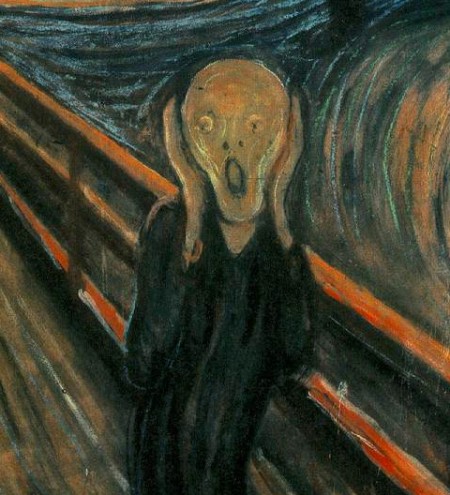
Most of the time, as you are caught up in your daily affairs, you do not perceive the Big Picture.  It is like someone standing very close to a beautiful painting.  You cannot see the whole image.  You only see little fragments and smudges of paint.  It may even look ugly, from where you are standing.

So today, we ask that you take a few moments to stand back and admire the painting.

Step back.  Look at the totality of your life.  Your childhood.  Your process of growing up.  All the individuals who have played significant roles in your life — your parents and grandparents, siblings, relatives, teachers, friends, boyfriends and girlfriends, your spouse or spouses, your children, your pets.  All the big characters in your drama.

If your life were a film, how would you portray it?  What are the key moments?  The stars.  The supporting roles.

With enough perspective and clarity, you may even begin to discover that your life has a theme, the way great dramas and works of art do.  There may be several themes, as in a symphony.

You are not trying to “figure anything out” or find “the point of it all.”  You are just observing.  Just stepping back, and looking.

With enough perspective, you may glimpse the great beauty of your life as a whole.  You may begin to see it as a work of art.  You may marvel at at the timing of events, and see the many characters — even the villainous ones, even the “enemies” — as the perfect players they are.   For every drama needs its villains.  Every painting needs shadow as well as light.

Again, there is nothing to “figure out” here.

All we ask is that you take a few steps back, and begin to perceive the Big Picture.  Even a brief glimpse can do you immeasurable good.

Today we ask that you take a good, long look at the things that you “stress about.”

What does this mean?

Many of you walk through life with a continual clamor of stressful thinking going on in your mind.  You worry, worry, worry.  It is a very sad thing to see.

Children and teenagers, who should be at play and enjoying the bright fresh energy of youth, are burdened by worry — often worry which their well-meaning, but worried, parents impose on them from an early age.

As life progresses, these worried young people age into worried middle-aged people, bogged down by a million cares.  Life is a miserable chore, a series of events to be slogged through until one reaches “retirement.”  At which point of course the aging human lives in a chronic state of worry about his health and mortality.

So what is going on here is that vast numbers of humans are living perfectly good lives in a state of abject misery.  We are not talking about deep impoverishment, as one finds in less developed countries.  We are talking about the kind of people who might be reading these words — even open, spiritually-minded individuals leading lives of relative comfort, who are nonetheless walking around in a semi-constant state of anxious misery.

Please understand that life is good.

Life is good.

Human life is good.

The world is good.

You are good.

Your life is good.

The people around you are good.

Your body is good.

If you look back on your life with any measure of perspective and clarity, you will see that the things that were a great source of stress and worry to you at earlier times were actually not all that important.  The life issues that “stressed you out” in high school, or college, or early adulthood — you can perhaps look back and see that the amount of time you spent engaged in worry over your problems was blown far out of proportion.

The same thing is happening right now.

If you are worried about something, you are in a state of not enjoying your life.  Can you see that as a child and teenager, without the worries imposed on you by parents and elders, you might have been very happy indeed, in your strong young body?  This is true for you right now.

Consider the dying man in a disintegrating body, who might look at you with all your worries and doubts, and say, ” I would take that life.  I would give anything to have that life.”  

Your life is good.  Wake up to this.

Take a good, long look at your worries.  Put them into correct perspective.  And live.

Today we ask you to stop viewing life in terms of problems and solutions.

Life is not a problem to be solved.

And yet many of you spend a great deal of time ruminating over your problems, and using the faculty of logic and strategy to devise solutions.

If you pause to look over the history of your life, what you will most likely discover is that the most significant events of your lives were not arrived at through strategy and problem solving.  No — you will discover a pattern of seeming coincidences, chance meetings, strange impulses, bolts out of the blue, hunches, flashes of insight, strokes of fate, luck, and so on.

If you really look at this, you will find that your logic faculty, which so often prides itself on being the captain of your ship, the arbiter of your life’s direction, is doing very little — if not nothing.  At the day-to-day level, it has its uses.  But in the big picture, problem solving and strategizing has done far less for you than you may believe.  You may also discover that your problem solving faculty is wrong just as often as it is right.

What this means is that problem solving has its uses, but there is a deeper reality that it cannot touch.  This deeper level cannot be accessed via the logical mind — not ever.  It cannot be accessed through that kind of thought.  It exists beyond thought; but it can be sensed through feeling.  It exists in the stillness, and in the sound of your breath.

That is the rightful place for your “problems.”  There is a power within you that is so far beyond your little stratagems and goals.  This power is what lies behind seeming coincidence.  It is the bolt out of the blue.

Place more of your consciousness in these depths, and not the shallows of the logical mind, and your “problems” will take on a different shape.  You may even discover that you have no problems, in truth.

Today we ask that you calm down.

Many of you enter the work week in a state of agitation and trepidation.  

You imagine all the things you must do.  The tasks to perform, the emails, the phone calls, the errands, the assignments, the chores, the conflicts, the grievances, the annoyances.  

Collectively all these worries settle like a layer of grease upon the consciousness, clouding vision, and creating nervous tension within the body.  This “grease” can then in turn trigger nervous and impulsive actions: the hasty email, the reactive phone call or conversation — which triggers even more stress and drama.

One of the single best things any human being in the midst of modern existence can do is just calm down.

Calm down.

Take ten breaths.

Reach down and touch your toes.

When feeling the need to take some impulsive action — to fire off that email, or make that complaint, or rush into that decision — STOP.  Stop, and take a breath.

Whatever it is, it can wait.

It can wait a few minutes.  If you need to, set a timer.  Five minutes.  Five minutes is long enough to calm down.  You may find that the desire for impulsive action will be greatly diminished after a five minute cooling down period.

Sometimes, like Ulysses in “The Odyssey,” it is essential that you tie yourself to the mast of your ship, and thereby stop yourself from following the Sirens’ Call of impulsive action that will lead you on to the rocks.

Knowing how to calm down, at will, even in the face of heat and drama, is one of the most intelligent, useful skills any human being can cultivate.

Today we ask that you lighten your load.

What does this mean?

Each of you carries around a heavy weight of responsibility and obligation, particularly in regard to events that have not yet happened.

Your minds fixate on events in the future.  You are told, societally, that you must live your life responsibly because of your future.  And this belief creates no end of misery — for how can you ever live up to this future?  How can you ever save enough, do enough, raise your children well enough, take good enough care of your health?  And so on.

You are all like the kings and conquerers of old, fixated on their dynasties, their pyramids — their “eternal reign.”

What nonsense.  The ancient kings are forgotten, their dynasties dispersed, their conquests dust and ashes.

You have no control over your future.

None.

While this idea may seem threatening to your ego, in reality, if you could fully accept this, you would feel a great release.

You have no control over your future.

This is not to say, “live irresponsibly.”

We are simply telling you, you have no control over your future.  You have no more control over your future than the kings of antiquity could create eternal dynasties.  

To live your life in an attempt to fulfill some impossible dream of the future — this is madness.

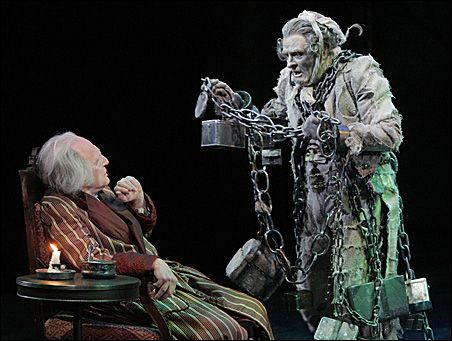
And so you all, like the Scrooge of “A Christmas Carol,” become pinched and miserly and controlling — and carry, at all times, a terrible, crushing weight, like Marley’s Ghost.

Release it.  Let it go.

Today we ask that you focus your attention completely on your breath for a very short period of time.

Many of you are familiar with meditation, and working with the breath.  Still, most of you may encounter difficulty keeping the mind free of thought even for a very short period of time.

So we ask you to try a very brief, simple exercise in which you close your eyes, focus on your breathing, and take ten breaths.  Counting each breath.

Inhale, exhale — one.

Inhale, exhale — two.

Inhale, exhale — three.

Inhale, exhale — four.

Inhale, exhale — five.

Inhale, exhale — six.

Inhale, exhale — seven.

Inhale, exhale — eight.

Inhale, exhale — nine.

Inhale, exhale — ten.

Can you be completely and totally focused on your breath, to the exclusion of all else, for ten breaths?  Try it and see.

Know that this simple practice can be of immeasurable benefit in your daily lives, particularly when you feel overwhelmed.