one thing at a time

Today we ask that you do one thing at a time.

Do one thing at a time.

If you have issues with productivity, feeling overwhelmed, or burned out — do one thing at a time.

In the modern world, there is this thing called multi-tasking, which is a very ridiculous idea that productive humans are supposed to do many things all at once.

Trying to do things all at once just means things get done poorly and inefficiently — or not at all.  It is not an intelligent way of doing things.

Many of you may have experienced what it is like to talk to someone on the phone when they are distracted by what is on their computer or phone, or by some other activity.  The person cannot really focus on what you are saying.  It is hard to communicate clearly, and you do not feel listened to.  You cannot have a good conversation this way.

It is like this with everything.  You cannot do many things at the same time with any sort of clear focus, or attention.

If you believe multi-tasking makes you more productive, this is simply not true.

If you really want to be effective and accomplish things, learn to do one thing at a time, and one thing only, with real focus.

If you are working on a project, do that.  Do not also check your phone every two minutes.  

If you are cooking a meal, do that.

If you are caring for a child, do that.

Just do what you are doing with your full attention.

If you want to spend time looking at social media or browsing the internet, then do that.  But just do that.  Set aside a specific time to do that.  Set a timer.  Give yourself fifteen minutes of just doing that, and nothing else.

The voice in your head may argue that you do not have enough time in the day to get things done without multi-tasking, but this is an illusion.  It is not true.

If you do things one at a time, with your full attention, you will accomplish far more than you think is possible.

This really works.

Notice your level of distraction, how your mind flits from task to task, thought to thought.

A distracted person is like a fluttering butterfly, blown this way and that in a breeze.  There is not much power there.

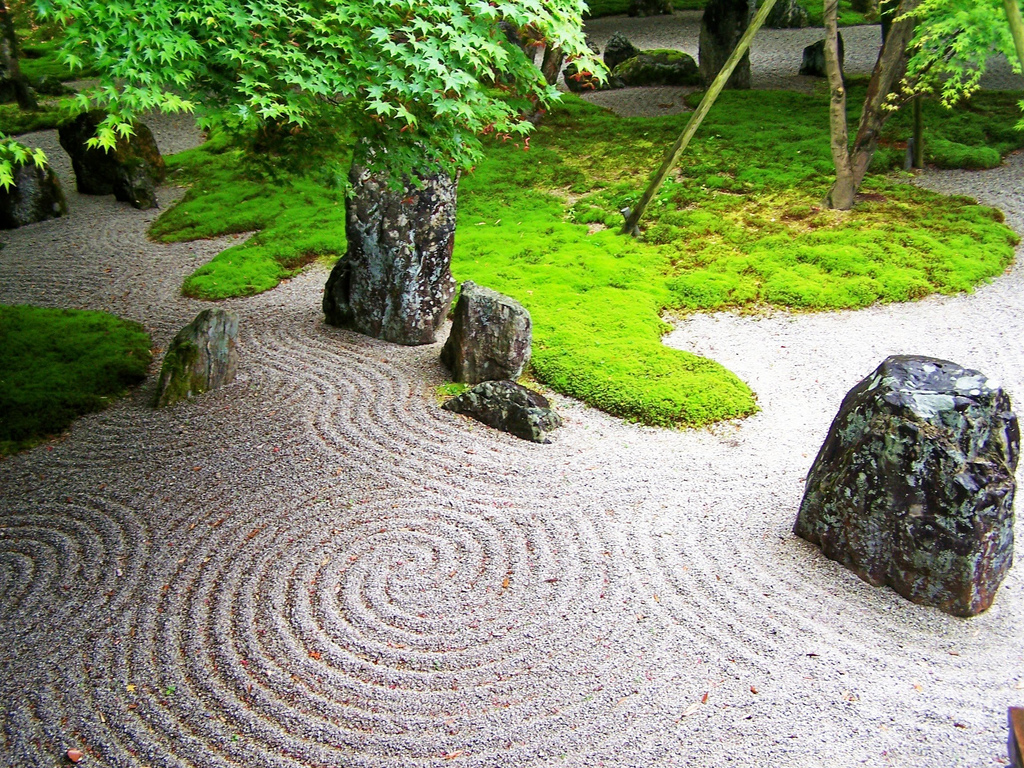
A focused person is solid, and present.  Like a rock, you are there, fully.  No breeze can blow you about.  There is a huge amount of power there.

If you are someone who believes there is never enough time in the day, if you feel constantly overwhelmed — then do this.

Do one thing at a time, and do it with your full attention.

This includes taking breaks, and resting.  If you are resting, really rest.  If you are stimulating your mind, you are not actually resting.  You are still busy doing something.  When you rest, rest.  

Try it.  What do you have to lose?

boredom

Today we ask that you reevaluate your feelings around the word “boredom.”

Most people associate boredom with something unpleasant.  “Ohhhh, I’m soooo bored!”

Modern people are so averse to boredom that they cannot tolerate it even for a moment.  They cannot stand in line at the post office, or wait to be served a meal in a restaurant without whipping out their phones, their little entertainment devices.  They check email and social media, they play games, they keep themselves stimulated.

Life needs to be constantly exciting, enriching, entertaining, and dramatic.  Even little children need to be continuously involved in “educational activities,” or given electronic entertainment in order to keep them occupied — and not bored.

But people are really missing out on life by building this intolerance to boredom.

You see, boredom is quite beautiful.

Great bursts of human creativity have traditionally arisen out of boredom.  The bored child is moved to imagine new worlds, to daydream.  Insight often comes to people when they are taking a shower, or washing the dishes — in short, doing something “boring.”

It’s in these “boring” times that the mind has a chance to process what it has taken in, build connections, and expand.

To the overstimulated, over-caffeinated modern brain, lying in a field looking up at the trees and clouds is “boring.”  Going for a quiet walk by yourself outdoors is “boring.”  Going fishing is “boring.”

And nothing is more “boring” than meditation.  Sitting cross-legged, staring at a wall!  What could be more boring?

Yet it is precisely in these “boring” spaces that really interesting things happen.

Modern humans tend to assign value judgments to activity.  Valuable activity is considered “productive,” “educational,” or “entertaining.”

Activity that does not appear to be productive, educational or entertaining is not valued.

It’s like everyone runs their lives as if they were a legal office, trying to maximize their “billable hours.”  Productive time is worth something, unproductive time is not.

But this is all quite crazy and backwards.

“Boring” activity, or non-activity, is just as meaningful and valuable as stimulating, seemingly productive activity.

When you are standing in a line, or waiting at a restaurant, and you refrain from stimulating yourself with your phone — if you can wait patiently, and mindfully, in a “bored” state — this is in truth far more useful than keeping up to date on Twitter.

If you are someone who feels stressed and overwhelmed, or has difficulty focusing or sleeping, it would be helpful for you to cultivate a greater tolerance for “boredom.”

When life is continuously stimulating, educational, entertaining, and dramatic — this is a recipe for exhaustion, anxiety, and burnout.

Everything you do is good.  Taking a shower is just as important as impressing the boss in the meeting.

It’s just as a important for your child to play a “nonsense” game in the park as it is for him to perform at the piano recital.  Children require unstructured play time in order to flourish.  It is okay for a child to be bored; it will inspire him to use his imagination.

Boredom can be beautiful.  And if you cultivate a spacious mind, it will no longer be boring.

It will be peaceful.  And joyful.

biting off more than you can chew

Today we ask that you value moderation in all things.

Value moderation in all things.

This is difficult for humans, especially in modern times, when so much is continuously available.

There is a very immature, yet powerful part of the human brain that believes that if one thing is good, then ten things must be better, and a hundred things are better still.

But this is not true.  “Too much of a good thing” is not a good thing.  It is harmful.

For example, for the human body to thrive, a moderate amount of sugar must be consumed in food each day.  Without glucose, the body and brain cannot function.

But too much sugar consumption causes all manner of disease, and obesity.

Most of you understand this about sugar, even if you may struggle with regulating your consumption.

But there are other things that modern humans overdo, without understanding the harm that they are causing to themselves.

In order to thrive, all humans require a moderate amount of neurological stimulation.

The human mind needs to learn, to problem solve, to take in art and music, and to be positively stimulated with different forms of information.

However, modern humans, plugged into technology, are far exceeding what is healthy in terms of neurological stimulation.

You are asking your brains to take in far too much information and stimuli, just as you are asking your bodies to take in far too much sugar.

The result of chronic neurological overstimulation is, as with sugar overconsumption, disease.

Chronic neurological overstimulation causes attention deficit disorder, focus issues, anxiety, depression, insomnia, mental illness, fatigue, and a host of unpleasant symptoms.

Neurological overstimulation is just as bad for you as eating too much sugar, and in some ways worse.

In order to thrive, healthy humans require a moderate amount of adaptational challenge, which might also be called “stress.”

When you engage in physical exercise, you are challenging your body to adapt and change.

Whenever you change your routine, you are challenging your mind to adapt.  Starting a new job, moving, having a child — these are all major adaptational challenges.  But even smaller things, like traveling, or having an out-of-town guest stay in your home, are adaptational challenges.  They are “stressors.”

It is healthy for humans to have a certain amount of adaptational challenge in life.  This is what allows you to expand your horizons, and grow.

But in excess, adaptational challenge becomes unhealthy “stress.”  And too much stress causes mental and physical illness.

The question to ask yourself is this:

Am I biting off more than I can chew?

Ask this about sugar, about information, and about challenge.

Are you consuming more sugar than your body can process?  Do you have difficulty regulating your weight, or your energy?

Are you consuming more information than your brain can process?  Do you have difficulty regulating your attention and focus?  Are you easily distracted?  Are you anxious?  Is your mind constantly churning?  Do you have difficulty sleeping?

Are you taking on more challenge than your body and mind can process?  Do you feel stressed?  Are you anxious?  Do you have difficulty relaxing, and sleeping?  Do you feel overwhelmed by life?

If any of this applies to you, the remedy is simple:

If you have weight and energy issues, look to your diet.  Eat less sugar.

If you have attention and focus issues, anxiety, or insomnia, look to the amount of information you take in.  Cut down on your TV and internet consumption.  Watch less.  Read less.

If you are stressed and overwhelmed, look to your schedule.  Look to the amount of activity you take on.  Do less.

You may think this is impossible, but this is not so.

Overconsuming sugar is an addiction.

Overconsuming information is an addiction.

Overscheduling and taking on too much challenge is an addiction.

The first step in dealing with an addiction is to acknowledge that what you are doing is unhealthy for you.

If you do not believe that eating too much sugar is unhealthy, you will not change.

If you do not believe that consuming too much information is unhealthy, you will not change.

If you do not believe that leading an over-scheduled, stressful lifestyle is unhealthy, you will not change.

And that is okay.

But if you are feeling sick or crazy, part of you probably would like to feel better.  And that requires changing your habits.

Practice moderation in all things.  

Sugar, information, and challenge are all necessary for human health — in the correct amount.

But too much can kill you.

Don’t bite off more than you can chew.  Practice moderation.

Happy_Girl

Today we ask that you make health and sanity your first priority.

While it should be obvious that without health and sanity, it is impossible to truly enjoy life, most people do not place an appropriate level of value on health and sanity.

While most people would probably say that yes, they do value their health and sanity, at the same time most people value other things more.

Many people make wealth and status their number one priority.

Others make their physical appearance their number one priority.

Others value achievement and public recognition of success as their number one priority.

Others value moral superiority and virtue as their number one priority.  This is often the case with religious people.

In each of these situations, the person is engaged in competition with others.  Wealth, status, physical appearance, achievements and recognition, moral superiority — all of these involve a hierarchy, a system by which some people are judged to be more worthy than others.  

Of course, these systems are completely arbitrary, varying widely according to one’s culture, nationality, the time period one happens to live in, etc.

Valuing your health and sanity is not competitive.

Yes, there are people who turn physical health into a competition — who can do the most difficult yoga poses, who can eat the purest diet, etc.  But, you see, that is not sane.  

That is why you must value your health AND sanity.  

When you value your health and sanity as your main priority, above all things, there is no sense of competition.  Your individual health and sanity has nothing to do with anyone else.

Your desire is simply to feel good, balanced, harmonious and stable in your body and mind.

When you contemplate an action, you evaluate it according to whether or not it is conducive to your health and sanity.  If it is not conducive to your health and sanity, you do not do it — even if you are feeling a strong impulsive craving.  

This is a very intelligent way of making choices.

Ask: Is what I’m about to do healthy for my body and mind?   Do I feel sane?

Again, there is no sense of competition here.  The ego is out of it.  It is just about what you sense to be harmonious for you, or not.  

If you find yourself feeling sick, unbalanced, or crazed, that is an indication that you need to get quiet with yourself, ground yourself, and reorient yourself toward health and sanity.

Can you see that if you make this your consistent, daily practice, your life experience will become much more enjoyable?

So, if you are struggling with life, ask yourself:

What do I value more than my health and sanity?

Is this thing really worth more to me than my health and sanity?

If you make health and sanity your number one priority, what you will find is that over time, everything else falls into place.  


the gift of space

Today we ask that you recognize the value of space.

Recognize the value of space.

What does this mean?

Space is what exists when other things are absent.

An open space does not have much “stuff” in it.

When there is a rest in a piece of music, there is silence.

Unscheduled “free” time is spacious, compared with scheduled time.

Modern humans have a very unfortunate habit of needing to fill up space.

“Stuff” is valued more than “space.”  So people’s lives become cluttered.

People’s living spaces are cluttered with too many objects and possessions.

People’s schedules are cluttered with too many activities.  If someone does happen to have a moment of “free time,” it must instantly be occupied — either with something “productive,” or something “entertaining.”

People’s senses are cluttered with too much stimuli.  Walk into many homes and work places, and there is a TV always blaring somewhere in the background.  People are always checking their phones and computers to see if anything “new” has happened in the past minute.  

No wonder people are so miserable.

It is quite impossible for humans to be healthy without sufficient space.

To be health, a human requires rest, silence, and room.

Is this clear?  You cannot be healthy without adequate rest, silence, and room.  

This is why meditation is so helpful for people.  It gives you a period of rest, silence, and room.

Without rest, silence, and room, there is no space for your energy to expand into.  You will feel constricted, overwhelmed, crushed, and claustrophobic.

The side effects of this are chronic anxiety, and stress-related health issues.

If you experience these issues, ask yourself:

How can I give myself more space?

How can I give myself more breathing room?

How can I have less “stuff” in my life?

You can start by getting rid of the clutter in your home and work space.

You can start by easing up on your schedule.

You can start with a meditation practice, even of a few minutes a day.

It doesn’t matter where you start.  Just start somewhere, and do your best to follow through.

How can your life be more spacious?

If you believe it’s impossible to experience more space, start by giving yourself the gift of silence.

Turn off the computer.  Turn off the TV.  Turn off your phone.   

Just do that, and right away, you will have more space.  You will have more room to breathe.

Try it, and you will see.


the process

Today we ask that you have patience with “the process.”

Most people tend to be very result-oriented, or goal-oriented.  They want to “get there” now.  They are like children in the back seat on the long road trip, whining “Are we there yet?”

Modern technology has in many ways served to worsen human impatience with process.  With gratification available at the click of a button, humans have become addicted to getting what they want now.  Everyone becomes the cranky child in the back seat if there is even the smallest delay in the gratification cycle.  It is no wonder that so many children are diagnosed with “attention deficit disorder,” especially when so many of their parents have the same neurological issue, only they refer to it as “multitasking” and see it as a positive attribute.

With so much eroding human patience, the practice of patience with “the process” must be actively cultivated.

In nature, there is no “instant gratification.”  All living things require time to grow and develop.  Human scientists may try to tinker with this process — and do — but the outcome is always very mixed.  Usually attempts to “speed up” natural processes cause far more harm than good.

This applies to all creative processes.  Despite the ever-increasing human drive to consume more, faster, the creative process cannot be forcefully sped up without causing damage.

All true processes take time.  Usually, with any process, there is an interim period where it can seem like things are a mess, and you’ll never get there.  

It is like the point on the road trip where you have been driving for hours, and realize you still have hundreds of miles before you.

It is like when you are cleaning out a cluttered closet, and all the contents have been laid out on the floor in a great pile.  It looks impossible to clean up such a disordered mess.

This is precisely the point in any process where patience and perseverance are most required.

Yet many people, addicted to instant gratification, are prone to giving up precisely at this point.  This is the major issue for anyone with “ADD.”  When quicker fixes are available, why pursue a process that is slow, and feels frustrating.

That is why you must cultivate patience with all processes, especially in those moments when it seems like a total mess or you’ll never get there.

In fact, it is good to recognize that what appears to be the moment of biggest mess or “not getting there” is, if you push on, always followed by major progress.

All life processes have a pattern where — on the way to greater order, beauty, and structure — there is a period of disorder.  When a caterpillar transforms into a butterfly, the caterpillar’s structure breaks down completely.

Fortunately, caterpillars do not “give up” halfway to becoming butterflies, because the process is messy, or takes too long.

You would be wise to do the same.

argument

Today we ask that you not “get up in arms” when people offend you.

People are always getting up in arms when they feel angry and offended.  They sit around ruminating, having grandiose arguments in their head with those who have offended them.  They may be having arguments with politicians, celebrities, people on TV or in the news.  You don’t have to know someone in order to have a heated argument in your head with them.  You may even be arguing with a dead person.

Really, this is a great waste of energy.  You have much better uses for your time and energy than engaging in arguments in your head, or worse, over email or the internet or such places.

Of course other people are going to offend you.  They may hold radically different beliefs about reality from you.  Mostly it is because they were taught to believe whatever they do in their formative years, and conditioned belief systems are very intractable.  People routinely confuse their belief systems with their identities.  They identify themselves as Christians, conservatives, atheists, liberals, etc.  They think that if they didn’t hold this particular set of beliefs, somehow they would cease to exist.

Why waste your breath with such people, even in your own mind?  Especially in your mind.

If you want to create positive change in your life or the world, there is no end of things you can do, that do not in any way involve arguing with people who offend you.

In fact, spending time in such arguments is a quagmire that will prevent you from creating positive change in your life and the world.  It is a trap.

Sometimes people feel very bored or empty in their lives, and going around picking arguments makes them feel more important.  You can find such people posting attacking, opinionated comments on the internet.  But they are everywhere, the world’s critics and complainers, all the huffy offended people.

What such people crave is attention, which is what you give them every time you argue with them.  Negative attention is still attention, and it makes them feel special and eases their boredom.  Every time someone argues back against an argumentative person, they get to be part of a drama, the star of their own reality show.  That is why they go around looking for arguments.  It makes them feel special, and they do not understand that human energy can be used in more constructive ways.

The best thing to do with critics and complainers and ranting people is to ignore them, and go about your business.  Otherwise you are only encouraging their behavior.  If no one paid attention, they would stop.  Truly, this is so.

Anyone reading these words has far better uses for their energy than to get caught up in arguments with people whose views offend them — including purely mental arguments.

If people stopped wasting their energy arguing, and used that energy for positive creation, the whole world would change overnight.

innocence

Today we ask that you know that you are completely innocent.

You are completely innocent.

You are as innocent now as when you were born.

The human consciousness always balks at this.

The belief in guilt and sin is very important to most people.  It is, of course, important to the religious — indeed, the belief in “original sin,” and punishment for sinners in the afterlife or else through punitive reincarnation is at the core of the major world religions.  But atheists also hold dear the notion that humans should be punished for their crimes — this what is it means to be moral.  If there were no systems in place to punish the guilty, mankind would dissolve into anarchy.

Believe it or not, from the perspective of an advanced “alien” civilization observing humanity, such beliefs would be considered primitive and barbaric — only a few steps removed from burning witches at the stake.

Guilt is a concept.  It has no actual existence outside the human collective consciousness.  Ideas of guilt, sin, and punishment must be taught to human children.  If a child were raised in a society that had no concept of guilt, he would not understand it.  The idea would seem foreign and frankly somewhat monstrous.  Certainly it would be perceived as the source of terrible misery that it is.

You may protest that this is nonsense.  Surely people who commit crimes are guilty, and must be punished.

You may protest that it is only your sense of guilt that keeps you moral and virtuous.  If you were not racked by guilt every time you did something wrong, you would be a shameless and immoral person.  Guilt is a necessary component of human morality.

But this is a lie.

In truth, the belief in guilt and sin has caused far more harm than good throughout human history.  It has been the cause of unending cycles of violence.  Countless humans have been murdered at the altar of guilt and sin.  The belief in guilt and sin warps human consciousness and causes insanity.

For example, why should it be that, in recent decades, many Catholic priests have been exposed as having committed terrible abuses against children?  Why would Catholic priests in particular be disposed toward such acts?  It is not solely because of their celibacy.  It is because the obsession with guilt and sin can, in many individuals, trigger insanity and deeply destructive behavior.

Still, you may protest: society would collapse we did not punish criminals.  We must protect the weak, and avenge victims.

But this system only perpetuates violence.  Take, for example, the end of apartheid in South Africa.  The only reason this did not cause massive violence and racial warfare was because of a deeply wise decision on the part of the black South African leadership to offer clemency to the white South Africans who had committed abuses and crimes.  In that situation, the guilty were not punished.  As a result, the country did not descend into mass violence.  

From the point of view of an advanced “alien” civilization, the notion of guilt and sin would be considered nonsensical.

From their point of view, any adult being who engages in destructive action directed toward the self or others would be considered mentally ill, and would be compassionately treated for this condition.

Is this clear?  No one in such a society would ever be “punished.”  However, if someone behaved violently, he would be considered mentally ill, and action would be taken to protect those he might inadvertently harm.

In your world, people with neurological diseases or mental illness often behave aggressively.  But you would never judge or punish someone you knew to be suffering from Alzheimer’s — that would be barbaric.

From a certain perspective, it could be said that anyone who behaves destructively has a neurological disorder.

While many might be threatened by this — for what does this ideology do to concepts of human morality, of “right and wrong,” etc. — it is simply a much clearer and truer way of perceiving matters.

Another way to perceive this is to observe the behavior of young children.  Young children often behave aggressively.  While a religious person might consider this evidence of “original sin,” a sane point of view would perceive such behavior not as sinful, but rather undeveloped.  An intelligent person does not judge an aggressive toddler, let alone scream at, hit, or in any way punitively attack such a toddler.  Instead, the wise parent calmly separates an aggressive toddler from other children so that he can do no harm, and places him in a “time-out” situation so that he can discharge his physical energy and calm down.  

There is no assignation of guilt, no suggestion of sin, and the “time-out” is not a punishment.  Young children are simply understood to be undeveloped, and still in the process of learning healthy ways to communicate and discharge physical energy.

Such skills must be taught and encouraged.  However, training children to feel guilty and ashamed of themselves only breeds neurosis and self-suppression.  The child learns to stuff down his energy, in which case destructive behavior erupts compulsively, manifesting later in life as addictions and destructive impulses.

Most so-called human adults are really just children muddling along in adult clothing, who never learned how to handle their energy in healthy ways.  And like children, they are totally innocent.

As Christ said on the cross: “Father, forgive them, for they know not what they do.”

This wisdom does not impugn guilt to the crucifiers.  Only ignorance.  And the ignorant are not to be judged.

You are innocent.  If you have caused harm to yourself or others, it was due to ignorance, or because you have been taught crazy, destructive beliefs by your elders, which is also ignorance.  You may have been in the grip of a compulsion, which like all addictive behavior is a form of illness.  It can be treated, but first it must be addressed compassionately as an illness, not as a crime to be punished.

Forgive yourself.  You are innocent.

If you truly believe this, with all your heart, you will instantly be at peace in this life.  

So it is up to you: hold on to your belief in guilt-based morality, and continue to suffer.

Or believe in your innocence, and be at peace.

tantrums

Today we ask that you cultivate a sane approach with “tantrums.”

Tantrums are associated with young children, but of course humans at all ages throw tantrums.  The angry boss screaming at an employee, the driver screaming in traffic, the person screaming at the telemarketer, the wife screaming at the husband — these are all “tantrums.”   Most adults have occasional tantrums, but some unhappy souls experience them as habitually as a two-year-old.

In its purest form, a tantrum is just a release of physical energy, often in reaction to an uncomfortable or threatening stimulus.  Infants sometimes scream not because they are hungry, tired, or need a diaper change, but because their physical existence feels uncomfortable or overstimulating and they need to release that tension through shrieking.

This physical energy release should not be suppressed.  Ideally, as the human matures, he learns to release his physical tension in healthier ways than the screaming baby or toddler.  Sadly, many humans never really learn how to “self-soothe.”

The physical release of a tantrum should not be suppressed, but at the same time, it is unwise to create any kind of mental drama around it.  Learn to sit with tantrum energy — not react to it.  The parent who gives his child a lot of attention or a sugary treat when he throws a tantrum in an effort to soothe the tantrum is, of course, only reinforcing the pattern.

Tantrums demand attention, and always shout: “There is a big drama going on here!  Look at me!”  A two-year-old makes a big drama when he wants ice cream, and doesn’t get it.  “Look at me!  Look at how much I’m suffering over not getting ice cream!  How could you be so cruel!”

In reality, no one is being cruel to the toddler.  But the toddler believes his parents are being terribly cruel.

It the same with the adult who throws a tantrum.  Usually there is a victim drama going on with the tantrum — life is unfair, how dare other people behave this way, etc.

What the wise adult learns to do is to separate the physical release energy of a tantrum, from the mental victimhood drama.

When you are hurt, scared, traumatized, or feel intense frustration and disappointment when a desire is thwarted, a physical release is often necessary.  It is healthy to cry, to tremble, or engage in some sort of physical exercise or body movement in order to “blow off steam” and release the tension.

What is not healthy is to suppress the physical release, and instead fester in the story of victimhood that arises with feelings of being hurt, scared, disappointed, or frustrated.  Don’t feed that mental voice.  Hear it, but don’t believe what it’s saying.  Believing that voice is like giving the tantruming toddler ice cream because you believe you really are a bad parent if you don’t.  It will only lock in a pattern of feeling victimized by life when you feel pain, fear, or frustration.  It will only encourage more “victim” tantrums in your mind.

Learn to separate the physical release of tension from the mental drama.  One way to do this is to “get out of your head” when you feel the volcanic energy of a tantrum building up, and instead focus on the physical sensations in your body.  For example, where do you feel the tension — your chest, your neck, your shoulders, etc.  How does the tension feel — tight, sharp, buzzing, wet, black, etc.  By focusing your attention on your body, not a mental drama, you allow the physical tension to release in a healthy way.

Learn neither to suppress nor indulge other people’s tantrums.  Don’t argue with someone who’s having a tantrum — arguing only feeds the energy — but don’t silently swallow whatever they’re saying, either.  Don’t buy into whatever they’re shouting at you; they’re not thinking clearly.  Just know that attention is the oxygen that feeds a tantrum, the way oxygen feeds a fire.  With tantrum energy, you want the fire to discharge and cool down.  Don’t add fuel to the flames.

This is the essence of good parenting — and every adult needs a good inner parent.

the power of symbols

Today we ask that you observe your patterns of symbolic thinking.

What is symbolic thinking?

For example, for an atheist, wine is just wine.  For a faithful Catholic, wine can, under certain circumstances, symbolize the blood of Christ.  

The human ability to think symbolically is of course what allows humans to create shared systems of language, and mathematics.  Humans share collective symbolism in mythology, religion, and stories.  It is a great and powerful gift.  

But like all powerful tools, it can be misused.

For example, racism is a manifestation of symbolic thinking gone awry.  The mind reduces a whole complex group of humans into a symbol: “The Blacks,” “The Jews,” etc.  For a racist, this symbol is associated with threatening qualities.  The process of converting whole groups of humans into simple symbols is what makes oppression and genocide possible.  It is much easier to destroy a symbol than living men, women, and children.

The human tendency to turn everything into a symbol is thus a source of much misery in the world.

Consider the “status symbol,” like a luxury car or a mansion, or even a pair of shoes.  The intense craving for such objects has less to do with the objects themselves, than with what they symbolize: importance, superiority, power.  For someone who puts a lot of stock into such symbols, but cannot afford them, the lack of ownership of such symbols creates feelings of worthlessness and shame.  It also drives destructive behavior: men often resort to crime and violence in order to acquire status symbols.  

A car is a car.  A luxury car may be pleasant to drive, but still, it is just a car.

If you remove the symbolism from a luxury car, you also remove the desperate craving for such objects, based on the false story that they imbue people with worth and power.

People often interact with other people not as humans, but as symbols.  “The Boss.”  “The Police Officer.”  “The Politician.”  “The Homeless Person.”

When you interact with other people as symbols, you dehumanize them.  You reduce an extremely complex, multidimensional entity with a soul into a flat cipher.

People do this continually, and unthinkingly.  It is a quality of the human brain, that it constantly reduces complex information into simple symbols.  While this ability is extremely useful, it can also be extremely destructive.

So just pay attention.  Pay attention to the habit of turning people, objects, and situations into symbols.

Say, for example, that you are the parent of a child whose room is a mess.  In reality, all that is there is a messy room.  But what does it symbolize?

Does it symbolize your child’s laziness and sloppiness?  Does it symbolize your lack of control over your child, or your failure as a parent?  Does it symbolize your child’s future: if he can’t clean his room, how will he succeed in life?  

What if the mess didn’t symbolize anything?  What if it were just a mess?  

Without the symbol, without the story, you would be much better equipped to actually deal with the mess in the present moment.  You would also be much less reactive and upset when talking to your child about it.

This is how the habit of turning everything into a symbol causes misery.

So just pay attention.  Try to notice the moment when someone or something in your life suddenly becomes a symbol of something else.  

A car is just a car.

A mess is just a mess.

Can you see what a difference this makes?

Question your symbols.  Especially question your symbolic understanding of other people.  

Symbolic thinking is a powerful tool.  Learn to use it wisely.