
Archives for category: Uncategorized

Today we ask that you express appreciation for something that is very good in your life.
No matter how downtrodden you may feel, there is always at least one thing you can feel appreciation for.
So find that one thing, and express appreciation for it. If it is a person in your life, you can reach out to that person, and express the appreciation directly. If it is not a person — if it is an animal, or something like the health of your physical body, or something else that you love and are grateful for — there are still so many ways to express appreciation.
Just think, or say aloud: “Thank you for being a part of my life.”
When the fires of your life are low, this is a way to rekindle them. It is like a little spark that you can blow on, to rekindle the flame of your vitality.
When you express appreciation, it is like the whole universe suddenly inclines itself toward you. Things become aligned.
And it is so simple!

Today we ask that you examine your motivations for doing what you do.
Life is very simple in certain ways. It is like an input/output machine. Whatever you put in, it puts out.
The purest motivation for doing anything is love. Whenever you undertake an action in a spirit of pure love, the experience and outcome will be very satisfying for you. There may be challenges, but even the challenges will be satisfying.
Trouble arises when one’s motives are mixed. Generally speaking, doing things “for the money” does not create joy or satisfaction. This is not because there is anything wrong with making money. But the pursuit of money for its own sake is not an endeavor that comes from the heart. It is different if you are making the money with the intent of using it in a pure-hearted way — then the energy will be there. But money alone is not a strong motivation for doing things.
Whenever your primary motivation is egoic in nature — when you do what you do chiefly for security, or status — then your life experience will feel very mixed and unpleasant. It is like operating a car on poor fuel, or eating a poor diet. Egoic motivations are not nourishing. They do not feel good.
So the more time in your life that you spend doing things out of pure love, the better. This is like consuming the most nourishing food. You will feel good, and more and more goodness will be created in your life.
Life is very simple that way.

Today we ask that you be very clear about reality.
You live in a topsy turvy world, where delusional thinking tends to rule the day, while true sanity is often dismissed as craziness.
What do we mean by this?
Humans spend a great deal of time being very upset because things should be different from what they are.
People should be different. Life should be different. Politicians should be different. Celebrities should be different. The world should be different. God should be different.
It is actually insane to believe these thoughts.
Being angry at the world because it isn’t different is like being angry at water for being wet. It is just crazy.
But this kind of craziness, in your reality, is considered sane.
Being an angry, divisive, combative, argumentative human is not only considered sane and commendable — but you may become a pundit by doing so.
Whereas someone who is basically happy and at peace with life is often considered suspect, or defective. There is something wrong with such a person. He has “drunk the Kool Aid.” He is out of touch, disconnected. Not realistic.
What a mad, mad, mad, mad world!
Do you know why a fundamentally calm, peaceful, happy person is that way?
Because he is very sane. He is not delusional about things.
A calm, peaceful person is not delusional. He is not walking around angry because things ought to be different and he ought to be in control of everything. Thinking someone ought to appoint him Czar of the Universe so that he could fix and improve reality.
A sane person perceives what is. He has no desire to go around fixing things and people. It is one thing if someone asks for help. But sane people don’t go around trying to impose their will on others like little dictators.
If you really believed and internalized the idea that sanity and wisdom go hand in hand with calm and serenity, perhaps you’ll listen less to all the angry pundits of the world.
Let the angry pundits scream at reality to be different.
The sane person rows his boat gently down the stream. Merrily, merrily, merrily, merrily.


Today we ask that you meditate on a time in your life when something happened to you that felt very bad — but that in retrospect, you can see was very good.
For example, you were in love with someone who did not love you in return. The relationship did not work out. In retrospect, you can see that this person was not a good match for you. You would not have been happy spending your life with this person.
Perhaps it was a school that you applied to, that rejected you. At the time you were devastated. But life took its own course, and you cannot imagine who you would be if you’d gone to that school. Instead you attended a different school, and that shaped your destiny. Or you didn’t go to school at all, and that shaped your destiny.
There are so many situations like this. Jobs you applied for, and didn’t get. Turning points in your life, where your desires were thwarted — but when you look back on it, you know in your heart it was for the best.
It may be happening to you right now. Your desire is being thwarted. Something is happening that you don’t want. It feels bad. You are frustrated. You wonder why life is so unfair.
Please know that there is a huge possibility that in the future, you will look back on what is happening and see that it is really for the best.
Do you know what it means to be “enlightened”?
An “enlightened” human is just someone who doesn’t need to look back on life in retrospect in order to see that things were for the best.
An enlightened person knows it right now, as it is happening. If it is happening, then it is for the best.
That is the only difference between you, and an “enlightened person.”
It may take you five or ten or fifty years or a whole lifetime to figure out what an enlightened person knows right now.
That is the only difference.

Today we would like to continue discussing stress, and its causes.
People tend to believe that stress is an entirely external thing. Stressful events occur. Your day is full of stress and problems. Life is about putting out fires, dealing with one crisis after another.
In truth, only a relatively small amount of stress is external in nature — certainly for most people living in peaceful nations, people who are not impoverished, this is true. For people in peaceful countries, who live lives of comparative prosperity — roof over head, food on table — stress is mainly an internal matter.
This is not to say external stress does not exist. But the way humans respond to stressful stimuli is highly variable, highly subjective. This demonstrates that the root cause is mostly internal.
For example: a high school student gets a “C” grade on a test. For some students, this is not a big deal. They passed; all is well. For a more high-strung student dealing with pressures and expectations, a “C” grade is a disaster.
So it is with many things. Some people get very stressed out sitting in traffic. Others put on music or an audiobook and don’t really mind. The external stress is the same. It is the internal state that is different.
What is a deeply traumatic event for one person is often a minor disruption for another.
So what determines this? Why do some people get incredibly stressed out by things that do not perturb others?
There are many factors at play. High-strung parents tend to raise high-strung children, it is true. This is not because the child is born high-strung, but because from an early age the child is being told and encouraged to be frightened and reactive. The world is presented as a dangerous, menacing place, and the only defense against it is hypervigilance and a quick reaction time.
Even if you have been raised this way, there are many things to do to increase your ability to tolerate and even embrace stressful events.
The first approach is to practice physical relaxation exercises — meditation, yoga, being outdoors, bathing, breathing, and so on — which helps to create a more relaxed space in your consciousness.
The second is to implement the practice of questioning one’s thoughts. “The Work” of Byron Katie is an extremely effective tool in this regard. Zen meditative practices are likewise an effective tool.
Basically, this is the practice of questioning one’s stressful thoughts as they arise, before they overwhelm the system and get out of hand.
For example, the high-strung student with the “C” grade would be encouraged to imagine reasons why the “C” grade is not a disaster, why he is in fact completely safe. The problem is put into correct perspective, shrunk down to size.
The person freaking out in the traffic jam would be encouraged to perceive that the traffic jam is not harming him in any way, and that remaining calm and light-hearted about the situation is the best, most practical way to get through it.
The main thing is to retrain the mind so that it gradually learns that hypervigilance and excessive reactivity is not a useful response to the vast majority of stressful situations.
Many people believe that screaming at problems makes them go away.
All that happens when you scream at a problem is that your heart rate soars, your whole body tenses, and you exhaust yourself physically. You are also very likely to make the problem worse.
Most people are attracted to someone who remains calm and present in a crisis. This is because most people instinctively understand that a calm mind best deals with stressful events.
That said, there are many people who get angry at other people for “not getting more upset” about things.
Really, when does “getting upset” help?
When a problem arises, you must take action. Isn’t it clear that the best action arises out of a stable, calm mind?
Once you really believe this and internalize it, you may gradually find yourself reacting much differently to stress.
Today we would like you to meditate on the idea that stress begets stress.
What does this mean?
It is very simple. When you think stressful thoughts — thoughts of fear, anxious projections about the future, “I’m not doing enough,” “I don’t have enough,” “Life is unfair to me,” and so on — this in turn creates stress within the physical body. Your adrenal glands are activated. You tense up. This is felt throughout the physical body.
This usually makes things worse. Physical tension makes it difficult to think clearly. You become more impulsive, more quick to anger. You become reactive. You make poor decisions. Sustained physical tension also leads to exhaustion — so you feel tired, and therefore less able to do things.
So stress begets stress.
If you wake up in the morning with stressful, anxious thoughts churning in your brain, it is likely that you may go on to experience a stressful, upsetting day. If your physical stress results in poor decision-making, or flashes of anger, you will experience this very directly.
Everything will seem to feed and reinforce the stress. Your children will irritate you. You will be miserable driving in traffic. You may even get a speeding ticket. It will be “one of those days.”
So how can you free yourself from the negative feedback loop?
Stress begets stress.
Relaxation begets relaxation.
The more you can take time to relax in the course of your day, the more your day will feel pleasant and relaxed.
When you relax your mind, you relax your body.
When your body is relaxed, you think more clearly, make better decisions, and remain calmer when stressful situations do arise.
You sleep better at night, and so wake up feeling relaxed and refreshed.
You won’t get the speeding ticket, because you won’t be running late, and speeding.
Relaxation is absolutely essential to proper function. You will get more done, more efficiently, when you are relaxed.
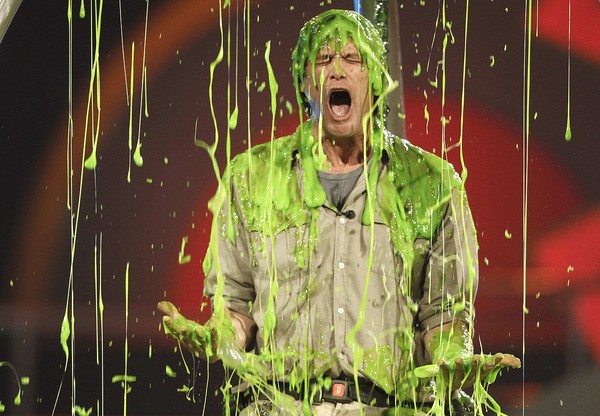
Stress slows everything down. It is like covering your mind and body with a layer of sticky tar. Everything feels bad. Everything is perceived through the layer of gunk, or slime.
Relaxation scrapes off the slime. You feel fresh and clear. You perceive reality with greater clarity.
How do you relax? Through meditation. Spending time outdoors. Doing gentle, grounding physical exercise. Being around animals. Listening to music that makes you feel good. Dancing. Singing. Taking a bath. Getting a massage.
All these activities are worth their weight in gold.
Anything you can do to increase relaxation and decrease stress in your life is worth its weight in gold.
Stress begets stress.
Relaxation begets relaxation.

Today we ask that you approach life with a spirit of trust.
We know that this is hard for many people. Many people have had traumatic experiences that have hardened their hearts, and made it difficult to be trusting. To trust is to be hurt; to expose a soft, fragile part of yourself to a cruel, uncaring world.
But this is an incorrect view of things.
Perhaps you are not as soft, fragile and wounded as you think you are.
Little children appear to be soft and fragile. But really, they are incredibly strong, and robust. When they are learning how to navigate in the world, they are always falling down, and hurting themselves.
Imagine if a little child, in the process of learning how to walk, fell down and hurt himself and decided: “Well, that’s it. I’m never going to walk. I’m done trying. Forget it.”
Children, of course, do not do this. They have a good cry about it, and then soon enough they’re at it again. Eventually they stop falling as much.
But adults tend to fall down and hurt themselves and say: “That’s it. I’m finished.”
What is the difference between the child and the adult?
The child’s mind does not create an elaborate story around falling down. Some children are certainly more tentative than others, more fearful — but the little child’s imagination isn’t as active.
In short, the little child doesn’t sit around reliving the hurts in his imagination. He falls down, has a good cry. Then moves on to the next thing.
But as the child grows, he is continually told by well-meaning adults that the world is a threatening place, and he must forever be on his guard against danger.
Also, he is taught that it is not okay to make mistakes. He must do everything he can to avoid making mistakes, because mistakes mean failure and disapproval.
His only real defense against making mistakes is his mind. By sitting around imagining all the potential mistakes he might make, and vigilantly guarding against them, he can protect himself from future failure and pain.
This is how the robust, adventurous child is socialized into a neurotic, tense adult. Traumatic episodes then become causes of complete paralysis.
In truth, traumatic episodes are temporary. They happen. They may last for a period of time. But then it is over.
It is the mind that makes them permanent.
It is possible to live life with all the robustness of a little child.
First, you must know that it is okay to fall down. It is okay to make mistakes. It is okay to “fail.”
You are not failing any more than the child who stumbles as he learns to walk is failing.
You are not failing. You are learning.
How else can you learn, except by making “mistakes”?
It is crazy to tell yourself that you are never allowed to make mistakes, that you must do everything right all the time.
Also, it is not the world that has failed you.
Even if you have been hurt many times, the world goes on being a wonderful place in which to learn, grow and explore — just as it is for little children.
This is not to say that terribly traumatic events do not occur.
But the day after the tragedy, the sun still rises. The birds still sing.
And it is still possible to trust.
It is okay to fall down and get hurt. It really is. And when it happens, cry! Cry, wail, release all the pain and fear. Take as long as you need.
But eventually you will be strong enough to pick yourself up and walk again. You are robust. You have a natural vitality, a body that heals, a heart that heals.
It is the mind that blocks you. The imagined fears, the trauma that you now relive over and over again.
And still — the sun rises. The birds sing.
Let go of the old hurts. It is safe to walk about, and play.
It is a good world, really. Trust it.

 wordfromthewell