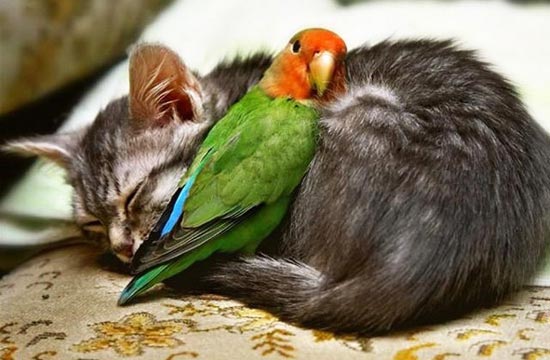
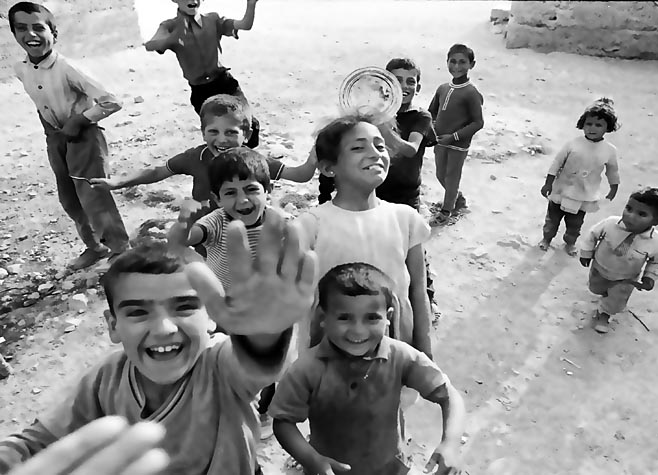
what did you expect?

Today we ask that you let go of your expectations about other people.

Many people experience a lot of suffering because they feel let down, hurt, or betrayed by other people.  For some, their whole lives get wrapped up in their grievances, in the ways other people have disappointed and hurt them.

And it is true that sometimes humans do terribly destructive things.  This isn’t meant to dismiss or minimize anyone’s experience of trauma.

However, there is a lot of unnecessary suffering caused by disappointed expectations.  This is really about the smaller, everyday grievances and betrayals people experience.

“So-and-so shouldn’t have done that to me.  They should have known better.  I would never treat someone else that way.”

This kind of thinking really is not very useful at all.

It is kind of like getting angry at a baby for crying, or at a child for making a mess with food.  It is like getting angry at a dog for barking, or a cat for meowing.

To say “someone should know better” is a bit silly.  Obviously they don’t know better.

If you consider yourself a paragon of virtuous behavior, that is wonderful.

Do you know how you can extend your virtue?

By being patient and tolerant with other people.

Stop trying to fix people.  Stop wishing they were different.  A dog is a dog, a cat is a cat.

With all that energy you expend being frustrated with other people, you could teach yourself to be more patient and tolerant.

What do you think you’ll have better luck with?

Getting someone else to change his ways?

Or working on yourself to expand your patience and acceptance?

If you wish other people to be more virtuous, the best way to do this is to be a good role model.

The parent who screams at a child to behave is only teaching the child that screaming is an acceptable way to solve problems.

Whenever you think: “So-and-so should be more something,” whatever that something is: nicer, more generous, more communicative, more responsible, etc.

Just teach yourself to do whatever that thing is.  You be nicer, more generous, more communicative, more responsible, etc.  And you can start with the person against whom you have a grievance.

Have high expectations of others, and you are in for terrible, continual disappointment and suffering.

Just work on yourself.

Today we ask that you admit you are not in control.

This is not an easy thing.

Even very spiritually-minded people who understand that they are part of a reality that is vast, beautiful, and unfathomable — even the most sensitive and spiritual people fall into the habit of thinking they are in control of something.

The world continually broadcasts the message that “you need to be in control.”

By staying “informed,” by watching the news, by reading the studies and reports — you can stay in control.

By reading self-help books, by learning how to “take charge of your life” — you can stay in control.

By eating healthy, pure foods and exercising — you can stay in control.

By parenting your children in the correct way, and sending them to the right schools — you can stay in control.

You will ignore all evidence to the contrary.

The people struck down in the prime of life by sickness, and by accidents.

The economic and natural disasters that create great upheaval in people’s lives.

You are not in control.

You do not know what will happen to you an hour from now, let alone a year from now.

Knowing this is the beginning of true wisdom.

You are not in control of a single thing.

This is very terrifying to the ego mind.  The ego mind will fight tooth and nail against this idea.

And yet the entire flow of existence will show you the absolute truth of it, time and time again.  You may not understand it even on your death bed, if you are like most humans.  But life will keep teaching you this lesson from now, until your physical death.

You are not in control of anything.

To really accept this is the beginning of enlightenment.

To transcend the fear of this is the beginning of true inner peace.

And when you live it, you are in total alignment with the flow of life.

There is no greater joy than this.

You are not in control.

If you believed this, you would be free.

Today we ask that you know that violence is never a good solution.

Many of you will agree with this statement.  And yet even sensitive, spiritually-minded individuals will say “But there are exceptions.”

When one is fighting for human rights, for freedoms, for example.  When one is fighting evil — then violence is acceptable.

This is not true.

Violent action always begets violent action.

Ultimately, it is an endless loop.  There is always war, there are always two sides.

When you are okay with the violent deaths of innocent civilians as “collateral damage” in a war against violent aggressors, then you are lost.  You are lost.

What are you saying?  Would you truly be okay with your own violent death, or the death of loved ones, as “collateral damage”?

If you happened to born into a country ruled by tyrants and madmen, would you truly deep down be okay getting slaughtered by the “forces of freedom”?

As the bombs fell, wouldn’t you ask: “Please, couldn’t there be another way?”

Being okay with collateral damage implies that some lives are simply more valuable than others.  The lives of people who happen to be situated on “the good side” are worth more than the lives of people who happen to be situated on “the bad side.”

Of such thinking arises the deaths of countless people.  

All lives are equal.  All humans, no matter where they are, are your brothers, sisters, and children.  

Violence begets violence.  Killing begets killing.

Please know that there is always, always, always, always, always, always, always, always a better way.

The ego mind will say, this is not so.  Sometimes violence is necessary.  It is unfortunate, but necessary.

And this makes sense, from a certain perspective.  You must guard and protect what is yours, and fight evil.

But isn’t this the root of all war?  People think: “I must guard and protect what is mine, and fight evil.”

Don’t your “enemies” believe exactly the same thing?  In their minds, they are guarding and protecting what is theirs, and fighting evil.

Peace and sanity can only be found when you let go of dualism, let go of “us” and “them.”

You are immortal beings.  You cannot, in fact, be killed.

And there is nothing in this world that is “yours.”  Ownership of anything is a fiction.  A thousand years from now, what will you own?  

Love.   Compassion.  Even for the “enemy.”  This is the only way out of the endless cycle of violence. 

There is always a better way.

Today we ask that you contemplate the idea of “non-attachment.”

This concept, which is one of the tenets of Eastern spirituality, tends to be deeply misunderstood.

People often think of non-attachment as meaning “not caring.”  It is seen as cold, and vaguely inhuman — like Spock, on “Star Trek.”

It can also be seen as a kind of awful passivity, at odds with the spirit of “making things happen” and “accomplishing things.”

If you are not attached to anything, why bother to do things?

Attachment is, for many, what it means to be human.  You strive and struggle for the things you care about.  You are naturally attached to outcome!

When you start a business, when you raise a child — naturally you are attached to things working out in a certain way.  You want things to be successful.  If you didn’t, you wouldn’t be human.

This belief system is, unfortunately, at odds with the flow of reality — which all too often takes people’s best-laid plans, and throws them to the wind.

It is not because reality is cruel.

It is because creating without attachment to specific outcome is in alignment with nature, and reality.

Plants scatter their seeds.  They do not know which seeds will sprout, or where their seeds will be taken.

When you create anything, you cannot know where that energy will go.  Very often life moves in directions that you could never foresee, or plan for.

Accepting this basic truth of existence is the essence of non-attachment, and it is what you are here to learn.

You are born into bodies that will die.  Every one of you will experience physical death.  There is no physical immortality.  Even if you have many children and grandchildren, you will not achieve physical immortality through them.

Everything you hold dear will eventually be swept away by the sands of time.  10,000 years from now, what will be here?

If people fully grasped this, it would mean an end to violence.  Why fight and kill over things no one can hold on to?  Alexander the Great, the Roman emperors — where are their conquests now?

So liberation from attachment, far from being cold and inhuman, is actually the path to deep compassion and true sanity.

Consider how much better parents would be to their children, if they were not attached to their children turning out a particular way, or going to certain schools, or entering certain professions?  Think how much more loving parents would be if they could really accept their children as they are.

For that is what non-attachment really is.

It is just accepting reality as it is, and not fighting with it.

This certainly doesn’t mean you shouldn’t create, and build, and dream.

It just means that acknowledging that whatever you do is subject to forces and powers much larger than yourself.

In western religious terms, it is saying “Thy will be done, not mine.’

That is what non-attachment is.

It does not mean you are a cold, uncaring alien, but actually someone who is very light in heart and spirit.  Someone who does not take life so seriously, for everything under the sun is impermanent.

The truth is, you never know what will happen.  No one knows what will happen.

Acknowledging this is the path to sanity, and peace.

Denying this is the path to constant misery.

Which would you prefer?

Let go.  Let go.


Today we ask that you understand the absolute necessity of feeling that your actions are meaningful.

No matter what you do, any joy derived from it is connected to meaning.  There is no joy without meaning.

“Meaning” does not quite evoke exactly what this is.  “Purpose” is another word — not exactly right, either.

Perhaps “wholeness” is a better word.

What you do, you must do with wholeness.

This means not being half-hearted about anything.  This means being fully committed to your actions.

It means believing in what you do.

It is that simple.  You must believe in what you do.  Then meaning, purpose, and joy will follow.

If you do not believe in what you do, then it does not matter how much money you make doing it.  Inside, something will eat away at you.  Over time, that something may manifest as physical or mental illness.

If you do believe in what you do, then it does not matter how little money you make doing it.  You might even do it for free.  You’ll have plenty of energy to do this work, and it will actually increase your physical and mental well-being.

So — when you do things you don’t believe in for money, in a way it is like “making a deal with the Devil.” There may be an outward appearance of worldly success, but your soul is in torment.  You are in a kind of Hell.

When you follow your heart and do things you believe in, you feel good.  You may face challenges, but you will have the strength to see them through.  You will find that the universe will support you — although perhaps not so much as to overfeed your ego.

It is good to do things that you believe in not for ego gratification, but for love.

If you are doing something you believe in, but there is a part of you that craves ego gratification — i.e. specialness, fame, riches — then the universe often has a way of “starving” this aspect, so that you can tap into a deeper, more truly selfless motivation.

That is why so often following the path of the heart can be a struggle, for a while.

It is not because reality is torturing you.

But it is important that energy be correctly aligned.  You must be whole in your actions.  If you are doing something for love, then really do it for love.

If people did what they believed in, there would be far less illness in your world.

Today we ask that you feel your deep unity with all things.

Though you may feel separate, individual, and very alone in a vast, uncaring universe, please know that this is not so.

You are not separate.  You are not alone.

Even if you do not have a single friend in this world, you are not alone.

You are part of something much larger than yourself.

What you think of as “you,” with all your likes and dislikes, memories, hopes, and fears, is just a tiny floating tip of an immense, unseen iceberg.

You are so much more than you think you are.  And there is so much you don’t know.

Separation is impossible.  Everything is porous in your reality.  Your energy field, your skin, your mind — it is all very porous, constantly interpenetrated with all that you encounter.  So how can you be separate?  Nothing is separate.

When you feel your connection with a loving universe, gratitude naturally follows.

Think of all the conditions required for you to exist in this moment.

The formation of your universe, your galaxy, your solar system, your planet.  The countless things that had to happen so that you could be here, now.

Your ancestors.  Your parents.

All the lives that have touched yours.  The teachers who helped to shape you.  The friends.

The books, the films, that have helped to guide you.  The stories and philosophies that have helped you make sense of your life.

The sun, the rain, the air you breathe, the food you eat.

You are part of all that, and all that is part of you.

You are not separate.

When you let go of the little you, you connect with a You that is so much bigger, so much more than you can comprehend.

Gratitude is a doorway that leads to the larger Self.

Today we ask that you are patient and tolerant with people who are “not on your level.”

If you are open to these words, then it is likely that you are a very open-minded individual.  You may engage in practices that increase and stabilize your open-mindedness, sanity, and compassion — like meditative, or spiritual practices.

And yet is very common for even the most open-minded, spiritual person to feel terrible frustration with other people who are “not on their level.”

Why shouldn’t they?  Violence, hatred, bigotry, greed, environmental destruction — how foul and blind and perverse mankind is.

Even at family gatherings, you may encounter the small-minded, the self-absorbed, the greedy, the cruel. You may encounter religious fundamentalists.  You may encounter people who are convinced that utterly insane beliefs are true and right.

What is a sensitive, open-minded person to do in such a world?

Sometimes you may feel you don’t belong on this planet.

This, of course, isn’t true.

You do belong on this planet.

Otherwise you wouldn’t be here.

What would humanity do without people who are open-minded and sensitive?

This world needs you.  Otherwise you wouldn’t be here.

And it may be true that many people you encounter are “not on your level.”

That does not make them worthless, or irredeemable.

Five year olds are not on your level, either.

They are your brothers and sisters.  They do not know any better, that is all.

As children, you have childish tastes.  You like bread and pizza and pasta and cookies.

As you grow up, your tastes may become more rarefied.  You learn to appreciate more subtle flavors.

But if no one ever exposed you to more subtle flavors, you might still only like eating bread and cookies — as so many grown-ups do.

It is the same with everything.  With food, with art, with spirituality.

Some people can appreciate a nuanced, subtle meal.  Others want bread and cookies.  They may even throw a tantrum if you give them a nuanced, subtle meal, when what they really want is bread and cookies.

If you yell at them for being like this, then you are a child yourself.

Can you have compassion for your brothers and sisters?  Can you refrain from yelling at them, or preaching at them, or getting into angry arguments?  Can you refrain from judging them, and complaining about them?

Can you refrain from hating them?

Can you refrain from being condescending toward them?

Can you be secure enough in yourself to just sit with them, in all their frailty — and see that they are you?

You have the capacity to be as blind, childish, and self-absorbed as anyone you judge.

The more compassion you feel toward “people who are not on your level,” the more compassionate you will be with yourself.

You belong on this planet.  You are a human, like it or not.  Please learn to love your brothers and sisters, in all their frailty.