do not compete with your brother

Today we ask that you look at the ways you compete with other people.

People are always competing, even if there’s no game, no race.

This pattern of behavior starts young, and is deeply ingrained.  Children compete for the attention of their parents.  They may experience terrible jealousy of their siblings, sometimes triggering violent behavior.

The myth of Cain and Abel runs deep.  According to this tale, jealousy is at the root of all murder.  And there is truth to this.  Indeed, if you look at most acts of murder, very often some form of jealousy is at the heart of it.

So it can be said that jealousy leads to violence.

Most often, jealousy leads to violence against the self.  You look at the person with the bigger house, the nicer car, the happy marriage, the successful career, and what happens?  A cruel voice says: “You worthless loser.  You failure.”

Why do you think Cain killed Abel?  To silence that terrible voice.

So humans compete with each other, as if life itself were some sort of brutal game.  One with winners and losers.  Only a select few can be declared “The Best.”  Only a few can win the medals and prizes.  The rest are destined to lives of mediocrity and failure.  

What a grim and awful portrait of life.  No wonder so many people are miserable.  This model makes it utterly impossible to feel joy, except for fleeting moments of “achievement.”

The truth of competition is that no matter how successful you may be, the next generation is always coming along to supplant you.  The top dog cannot remain top dog forever.  There’s always a bigger, better top dog.  

There is only one way to “win” at this game.

You must stop playing it.

That is the only way to win.

For if you play the game of competition, you are doomed to fail, sooner or later.  Death comes to billionaires and dictators.  People who were internationally famous even a century ago are now largely forgotten.  

You may know this.  But still, it is hard to really live from this place, to stop the urge to compete with your brother, to not feel jealousy and worthlessness every time you think you are “losing.”

To a large degree, this is instinctive behavior.  Animals in the wild compete for limited resources, and can be quite violent.  Primates have a hierarchical society, in which alpha males and females dominate the weak.  The strong and brutal survive to pass along their genes.

And there is no judgment around this.  Animals are totally innocent.

The truth is, humans are not so far from animals, on the whole. 

But — and this is key — humans, unlike animals, have the capacity to consciously go against their instinctive programming.

You can consciously choose to live life in a completely different way, often at odds with instinctive behavior.  And you can teach your children to live life in this way.  

Animals may compete to survive, but they also have the capacity to cooperate and even behave altruistically.  Mother animals may adopt babies that are not their own — sometimes from a different species.  Cooperation and altruism is a highly adaptive behavior in animals.  Animals who learn to cooperate usually have higher survival rates, and even thrive.  

So it is with humans, on a far vaster scale.  

Only humans have the power to choose non-violent responses to acts of aggression, not from a place of submissive weakness, but from indomitable strength.

When humans are not caught up in instinctive competitive behaviors, great energy is freed for them to create and expand on a massive scale.

When little siblings compete, there is fighting and crying.  Toys are broken, a mess is made.  When siblings play together, there is joy, and shared exploration.

It is the same for all men.  Learn to control your competitive instincts, as hard as it may be.  It is very possible to do this, by becoming more conscious around the behavior.

There is nothing wrong with playing games, from a place of joy.  But if you cannot play a game without taking yourself very seriously and feeling like your whole self-image and even survival depends on winning — then do not play this game.  You must give yourself a “time out.”

Humans can consciously choose to enjoy life, and appreciate life’s beauty no matter what their rank and status in some arbitrary societal hierarchy.  

In short, you have everything you require, right now in this moment, to dwell in peace and joy.  Nothing outside of you can give this to you.

Do not compete with your brothers from a place of status-seeking and jealousy.  You will never find peace if you do.

celebrate the body

Today we ask that you focus on and celebrate your physical body.

The physical body is a wondrous thing.  Human science is nowhere near replicating it.  It is highly complex, and beautifully fine-tuned.

In a previous post, we compared the body to a Stradivarius violin.  It is truly a precious, priceless instrument.

Many people in this time are learning to treat their bodies with more love and care, in terms of nourishment and exercise.

But still, people tend to be at best unkind to their bodies, and at worst viciously cruel.

Your physical body is doing its absolute best.

It is doing its absolute best.

This is true if you are sick, injured, have chronic health problems, or are overweight.

Your body really is doing its best.  

Consider the horse.  

Think of a horse that lives in the country on a farm, breathes fresh air, is well-fed and well cared for, with plenty of room to run around and stretch its legs.

Probably you imagine a healthy horse, with a glossy coat and mane.

Now think of an old-fashioned workhorse, poorly fed, pulling a wagon all day, whipped and yelled at.

Probably you imagine an unhealthy horse, with a rough coat and sagging skin.

Which horse do you feel closer to?

If you identify with the workhorse, then perhaps it is not surprising that your physical body may have difficulty keeping up with your demands and criticism.

Be kind to your body.

Be kind to your body.

Your body is the seat of your mind.  Do you think it is possible for the mind to think clearly in a chronically ill, malnourished, or exhausted body?

It is not possible.

Give your body a break.  Let it stretch its legs, and breathe fresh air.  Feed it nourishing food, and give it love.

If you make great demands on your physical system, then investigate ways to help your body meet these demands with food, healthy supplements, and exercise.

If you are a racehorse, treat your body accordingly.  The owner of a racehorse makes sure his animal is extremely well cared for, if he wise.  After all, the racehorse is a major investment.

You only have one body in this lifetime, so for you, this is a major investment.  Treat it well.  Feed it well.  Do not abuse it.

And know that whatever it is doing at this moment is truly its best, under the circumstances.  Your body always does its best.  Be kind to it.

what keeps you in your cage?

Today we ask that you examine the way you treat yourself.

Are you kind to yourself?  Or do you constantly attack and criticize the person in the mirror?

For the most part, people are very mean to themselves.

People are sometimes meaner to themselves than anyone.  Their enemies might not be as mean.

What is it all about, this cruelty to the self?  Why all this casual self-abuse?

Little children are not mean to themselves, in this way.  Yet by adolescence, self-attacking behavior is often deeply ingrained.  What happens between early childhood, and adolescence, in terms of the construction of self-image?

At a certain point of development, adults consider it useful to expose children to harsh judgment and criticism.  This is an essential part of the human “domestication” process, by which children are transformed into young adults prepared to occupy the roles considered appropriate and acceptable to their culture.

This varies from culture to culture.  In some culture, the roles of men and women are extremely constricted.  Arranged marriages in adolescence are the norm.  Men are expected to go into the family trade, and women are expected to be wives and mothers.  One does what the family expects.  That is what it means to be “good.” To whatever degree their true selves and deeper yearnings clash with these cultural expectations, they believe they are “bad.”  They suffer.  They are not good enough.

In more developed countries, there is certainly the appearance of greater choice.  One would think that people would be much happier — but this is not the case.  The self-image is still heavily shaped by familial and cultural expectations.  Even if one rebels against this, most people still buy into cultural ideals regarding what makes a “Successful Man” or a “Successful Woman.”  Given the hierarchical nature of society, not everyone can be successful according to these standards.  Only a few can reside on top of the pyramid.  The rest struggle and strive to improve their lot, or give their children a better chance of climbing the ladder.

And this is the main argument for why cruelty to the self is useful:

“Without criticism and attack, people are lazy and unmotivated.”

“If people could do whatever they wanted, they would just sit around and do nothing.  Society would crumble.”

This is like believing you need to whip a horse to make it run.  Only a poor horseman believes this.

“Society will crumble” is a very common justification for all manner of cruelty, abuse, and enslavement.

In societies that believe in arranged marriages for teenagers, the thought of individuals choosing their partners is perceived as deeply threatening.  “Society would crumble.”

In the antebellum American South, “society will crumble” was the justification for the continuance of slavery, and all the abuses of slavery.

Racists, sexists, bigots of every stripe — always they claim that “Society will crumble,” if people have greater freedom.  People must be abused and suppressed in order to protect society.  

So: why do people engage in self-abuse?  Why do they attack and whip themselves?

Because they have been conditioned to believe that their personal “society” would crumble, otherwise.

They believe that their identity would collapse.  And this is seen as an existential threat.

So people beat themselves up all day, in order to keep doing what they think they’re supposed to do to keep their society, their identity going.  And there is terrible misery.  

Despite what the racists and bigots say, society does not collapse when people are freed.

Society changes.  For the better.

And it is the resistance to this change that can cause far greater suffering, as was the case in the slaveholding American South.

The Voice in your head that beats you up all day long is the slaveholder.  You are the slave.

Imagine a thirteen year old girl living in a culture where she is told that she must marry a man in his fifties in order to bring honor and security to her family.

If she screamed “No, I won’t!” would you judge her for doing so?

But her family would surely beat her into submission.  They would feel very justified in doing so.  They would say, it is for her own good.  Society would crumble, if girls did not obey their parents.

You would probably think that was wrong, wouldn’t you?  

And yet some of you may know people who marry for security, not love.  

Some of you may know people who enter careers they do not like, to make their families happy.

And when their souls scream out against these choices, they beat themselves into submission.  They say, it is for your own good, that you do this.

So consider how much of your self-abuse and self-cruelty is cultural in this way.  If you had been raised in a different family or culture, you would be abusing yourself over completely different things.

Of course, it is possible to imagine a world in which people do not abuse themselves at all.  A human child raised in that world would not learn self-abuse, and would in fact be quite horrified by a field trip to Planet Earth.

Do not despair, that you live here.  Just question, really question, whether the Abusive Voice in your head is really acting in your own best interest, as it claims to.

What if you stopped whipping the horse, to make it run?

Isn’t it possible that the horse would actually run faster, if it weren’t terrified and exhausted all the time?

Many of you don’t even know what it’s like not to act from the place of “whipping the horse.”

And if this is the case, no matter how much you love your children, you will eventually teach them that they must whip themselves to be motivated to accomplish things, for their own good.

All of this can stop right now.  Your world will not crumble.

If you are someone who finds abuse abhorrent, please end it in your own mind.  

what you are worth

Today we ask that you question the concept that “things outside you give you worth.”

The notion that “things outside you give you worth” is such a key belief in your reality that the thought of questioning it may seem absurd.

And yet it is a completely made-up thing.

Things outside of you do not give you worth.

In some cultures, worth is represented by how many sheep you own.

In some cultures, worth is represented by how many seashells you own.

In some cultures, a woman’s worth is determined by how many healthy sons she’s given birth to.

In some cultures, a grown man without a beard is considered worthless.

In some cultures, worth is represented by your house and car.

In some cultures, worth is represented by your level of spiritual advancement, according to a guru or lama.

Can you see how utterly subjective this is?  What is worth a great deal to one person is worthless to another.

Of course, what all cultures have in common is the idea that something outside of the self measures worth.  It may be sheep or seashells or male babies.  But it’s something.

And yet what is it, really?

For many people, self-worth is linked to a number on a computer screen.  When the number goes up, they are worth more.  When the number drops, they are worth less.

But what happens if there is a sudden, unexpected turn — and the number drastically drops?  Such things are known to happen.

People go very crazy when his happens, for they truly believe that the number determines their worth.  Sometimes people commit suicide when the number drops too low.

This is not meant to be cavalier about your monetary system.  Many of you live in terror of poverty and homelessness, and for some this may be a legitimate fear.  For many, however, the true sense of dread around poverty arises because they truly, deeply believe that a number can determine the worth of the human being.

Consciously, you may acknowledge that a homeless person is just as valuable as a billionaire.

But do you really honestly believe this, deep down?

Most people are so hypnotized by cultural values in regard to money that deep down they do not truly believe that all men are equal.  They do not live from that place.

Of course, it is not just the number on the screen that determines worth.

For many, physical appearance determines worth.  This is especially true for many women, who even in this liberated time still believe that beauty is a commodity, meant to attract a man with status.

In many cultures, a woman’s fertility determines her worth.  This is true in first world countries, where many women still feel stigmatized and worthless if they are infertile, or choose not to be mothers.

There are many ways of measuring status.

Some people like to think of themselves as being non-materialistic.  Such people may say this, and yet still be invested in other forms of status, like awards, or titles.  

Some people look to accumulate merit through virtuous behavior.  While this can come from a good place, it can sometimes lead to rigid perfectionism.  “Puritanism” was such a belief system.  

On and on it goes.  All the things people cling to so that they can see: “See, I am better than this other person! I am worth something.”

One man proclaims he is better than another because he has a nice house and an expensive car and a pretty wife and smart children.

Another man proclaims that he is greener, more ecological than other people.  Another man proclaims he is a better Christian than the others in his church.  Even the non-attached Buddhist may get attached to how much he meditates or how much merit he is accumulating.

When people look down on materialists, look out.  They collect their worth through moral superiority.

All because people feel worthless.  People feel worthless unless they can tell people exactly why they are worth something.  Listen to people talk, especially when they are meeting someone new.  “Hello, this is what I do, this is why I am worth something.”

Or they will say: “I am friends with so-and-so who did this and that.”

That’s another funny belief.  That being friends with someone who is worth something makes you worth more.

Even if you saw a bunch of innocent babies, you might be inclined to assign value judgments.  In many cultures, a male baby is worth more than a female baby.  Or a light-skinned baby is worth more than a brown-skinned baby.  Or a beautiful baby is worth more than an ugly baby.  

But let’s say you saw a group of babies, all of the same gender and skin tone and the same approximate level of baby beauty.

Then, perhaps, you would have difficulty assigning value judgments.

Then, perhaps, you could begin to perceive the infinite worth of each child.

If you could see yourself with divine perception, that is how you would appear.

Some of you have relationships with beloved animals.

Does this animal love you because of your money and possessions?

Someone cynical might say, well, the animal loves the person because the person feeds it.  But one can give food to a feral animal without the creation of a loving bond.

Those of you who have had the experience of unconditional love from an animal know that this is very wonderful.  For animals don’t care what you look like, or if you have won prizes, or drive an expensive car.  They would never think of you as “worthless,” any more than they would think of themselves as worthless.

If people loved themselves as much as their pets love them, what a joyful world this would be.

If the concept of worth is totally subjective, then perhaps it is completely meaningless.  It is whatever your culture has taught you to believe.  If you had been raised in a different culture, you might value yourself and others according to completely different standards.

Here is the truth:

You are worth as much as you believe you are are worth.  It has nothing to do with anything outside your mind.

It is well known that rich and famous and beautiful people may suffer from terrible feelings of worthlessness, while a person of modest means may be quite content with himself.

If you want to feel like you are worth something, stop linking your sense of self-worth to what is outside of you, and thus beyond your control.  The number on the screen may go up an down in ways that are quite beyond your control.  It is therefore unwise to hook your self-worth to something so arbitrary.

You do have the ability to control your perception — primarily by learning to question what you are told and taught.  The authority figures and TV commercials may tell you what makes a human worth something in your culture — but are they telling the truth?  Is it a universal truth?

You are worth something, as you are right now.  You are worth everything, as you are right now.

Nothing outside of you determines your worth.

If you really believe this, then you will be wonderfully free.


no pain no gain

Today we ask that you examine your beliefs around pain and suffering.

What do you believe about pain and suffering?

Generally, no one likes to suffer.

Or rather, most people consciously believe they dislike suffering, and want to avoid it.

But unconsciously, something else is going on.

In truth, many people are taught from a very early age that suffering is a sign of virtue.  Certainly this has been a central theme in much religion.  The suffering, tortured martyr is guaranteed a place in Heaven.  

Even if you are a fully secular person who was not raised in a religious environment, these beliefs are so deeply ingrained in many cultures that it is impossible not to absorb them.

Centuries ago, people demonstrated their virtue before God by flogging themselves.

Nowadays people demonstrate virtue by working themselves into exhaustion, and illness.

Many people have a bias against people who appear to be “lucky,” to “have all the luck,” and who have not suffered enough, in their estimation.

It is believed that suffering leads to great art.  The myth of the tortured artist remains prevalent in your world.

Pain, suffering, exhaustion — these are considered signs of virtue.  You know you are a good person if you are overworked and in pain.  

“No pain, no gain” goes the saying.

This is utter madness.

So just look today at ways in which you believe that pain and suffering are virtuous.

Even if you are someone who dislikes suffering, as most people do — do you have ideas that suffering ennobles people?  That it is good for one’s character?  That there is a shallowness about people who haven’t suffered enough in life?

You may think religion is nonsense, and yet be a self-flagellating martyr.

You may think religion is nonsense, and yet believe that victims are more noble than “lucky people.”

So just investigate these beliefs.

Can you imagine a world in which people did not believe these things?

Do you believe that such a place would be less moral than your world?

Imagine a world in which people actively cultivated states of joy and well-being, and taught their children to do the same.  

Do you think there would be widespread violence in a world like that? 

This does not mean, suppress negative emotion or pretend to be happy.  But states of joy can be cultivated, the same way physical health can be cultivated. 

Such worlds do exist.

Your children are not born with the belief that suffering is virtuous.

It is something that must be taught.

And if it is something that must be taught, perhaps it isn’t true.  Humans, over history, have been taught a great many things that are not true.  

who are you at war with?

Today we ask that you look at the things you are at war with.

Most people are at war, even if they are not soldiers on a battlefield.

You are at war with your boss.  You are at war with your spouse.  You are at war with your parent.  You are at war with your sibling.  You are at war with your child.  

You are at war with the politicians.  You are at war with the corporations.

You are at war with your body.  You are at war with your illness.  You are at war with your addiction.  You are at war with God.  You are at war with yourself.

So just look at the ways you are at war right now.

People are always declaring war on things.  There is a “War on Drugs.”  A “War on Cancer.”

Do you really think this is a good idea, declaring war on things?

What happens in a war?  There is usually a lot of violence and death, isn’t there.

Do you really think violence is a good solution to problems?

You may think you are a peaceful person.  But just wait until you are spending time with your family at the holidays.  Then the war begins.

You may think you are a peaceful person, until you read that text or email.  Then right away, you are at war.

So just look at these ways in which suddenly you go marching off to war.

War is not a good solution to problems.

Say that you think you are overweight.  Do you believe any good will come of you going to war with your body over this?  Calling yourself fat, attacking yourself when you eat?  Even if you lose weight from this place — you win a battle, but at terrible cost.  For you have treated yourself with violence.

People get sick when they are at war with themselves.

Wars are exhausting.  Like a nation at war, all your resources are drained by warfare.

So just look at the things you are at war with.

What would happen if you declared peace with these things?

Do you really believe you would lose something, if you ceased your violent thoughts toward these things?

Peace is more productive than war, isn’t it?  Think of all the things a nation can do with its resources, if it isn’t spending all its energy on war and defense.

So it is for individuals.

Try declaring peace, even for one day.  Declare peace with your boss, your spouse, your parents, your children, your family, your ex, the politician, the corporation.  Just in your mind, declare peace with all your enemies today.  Declare peace with your body, with yourself, with God.

You won’t really lose anything.

And you will gain peace, which is the most precious thing of all.

don't take yourself too seriously

Today we ask that you take nothing seriously.

Truly, nothing.

If you look at men who cause great harm to others, always you will see that they take themselves very seriously.  Tyrants and dictators take themselves so seriously that they will murder anyone who disagrees with them.

The world is full of little dictators.  In every office and home, you may find a little dictator.

Sometimes you may even be a little dictator yourself.

You’re so intent on proving your rightness and superiority that you lose any sense of humor or perspective.  

Little children do this, when they throw tantrums.  They may scream about getting to eat the ice cream or how it’s unfair that their brother gets to do something and they don’t.  They take their affairs very seriously.  It feels like life or death to them, whether they get that ice cream or not.  

Part of growing up is learning to laugh at yourself in such moments, and not to take things too seriously.

You may protest: “Well, what about big important issues facing the world today.  Surely people must take those things seriously.”

Do not take those things seriously, either.

That does not mean, be complacent or do nothing.

It just means, have a  light touch.  It is no coincidence that some of the most politically persuasive individuals of your time are TV comedians who take great delight at poking fun at those who take themselves too seriously.

So next time you are very worked up and angry and heated over some issue, consider for a moment how silly you look.  Making your angry, tense face, insisting that your demands be heard.

This does not mean you should invalidate your feelings or your needs.  It just asks you to put things into correct perspective.

One of the best things to be in this world is a Holy Fool.

Blessed is the being who easily laughs at himself.

2+25

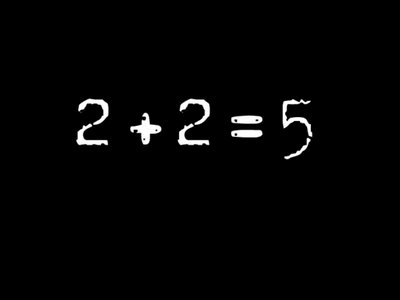
Today we ask that you cultivate a healthy skepticism.

This may seem like odd advice to receive from a spiritual source.  Isn’t the point to be open-minded?

There is a difference between cynicism and skepticism.

Cynicism is the quality of being faithless, pessimistic, judging, and negative.  Often there is a “cool” factor to the cynic.  The cynic is the person who refuses to be impressed or awed, who rolls his eyes, who feels most comfortable criticizing and tearing down what other people do.

The skeptic is someone who does not believe everything he hears.  He listens, and he tries concepts and ideas on for himself, before accepting someone else’s story about reality.

A cynic may not be skeptical at all.  He may hear gossip about someone and believe it without question, or hear from someone that a movie or TV show is bad and believe it without question.

The skeptic questions what he hears.

He looks to the source of any information he takes in, and measures how trustworthy the source is.  If someone says something on the internet, this is probably not so trustworthy.

The skeptic looks within to see how he feels about what he hears.  

He is not quick to judge or condemn anyone else.  He is never part of a “mob.”

A skeptic is highly sensitive to attempts to manipulate and control his consciousness through advertising and propaganda.

That does not mean he is not open to new ideas.  In fact, he’s quite open.  It is his skepticism that allows him to take in new concepts without fear.  He knows that he will not blindly swallow just any old idea, so he does not need to fear different or opposing ideologies.

When you do not believe everything you hear, there is no need to be defensive or angry.  Other people’s beliefs no longer threaten you.

Can you follow this?  People are threatened by opposing beliefs because some part of them actually believes the opposing point of view.  It may be a subconscious part, but this is always true.  If you truly believe that someone’s ideology is total nonsense, then it is not particularly threatening to you.

For example, a child may tell you a story about how “Giant Monsters Live On the Moon.”  You won’t panic about the giant monsters, or feel threatened, or judge the child for saying these things.  You know it’s just a child telling a tale.

And yet you do not have the same level of discernment when it comes to reading things printed in bold letters on the internet.

That is why it is wise to cultivate healthy skepticism.

Learn to ask: “Is that really true?” when you are presented with information.  “Can I be sure of this?”

Do not believe everything you hear.  At the same time, be open to listen.

That is the path of wisdom.

core essence

Today we ask that you investigate your core essence.

It is easy to see the core essence in children.  They are born with it.  As they grow and develop, they go through outward changes.  But the core essence of the child does not change.  Any parent with sensitivity is aware of this.

This never changes.  Though you may believe that you have changed greatly as you travel through life, there is a part of you that is the same as it has ever been.

This is your core essence.  The part of you that is intrinsically You.  The soul.  The essence.

If you look back on your life with clarity, you can perceive this core essence.  There is an unchanging You-ness at the heart of your life.  This essence existed before you were born into a physical body, and it will continue to exist after the body dies.  It is okay if you do not believe this.  But it is as true as any law of nature. 

Water may be ice or steam, but it is always intrinsically water.  Someone who did not know about this might not recognize water in its ice form or steam form, but ice and steam are water whether you know it or not.  When water turns to steam, not a single molecule is lost.

Such is the case with your core essence.  Your state may change over time.  You may exist at different states of density, like the water that can be ice, liquid, or steam.  But your essence is always the same.

The core essence is similar, also, to a “theme.”

A complex piece of music, like a symphony, will go through many movements.  However, there is always a core theme that runs through it, that the music weaves itself around.

This is also true in narrative fiction, in poetry, drama, novels, plays.  While stories go through many acts, there is a singular theme that runs beneath.

Most people go through their lives without understanding that there is a theme, or a core essence, that runs through it like the theme of a symphony, or Shakespearean play.

And yet this is so.

You can discover this theme if you regard your life with clarity, and some distance.  If you can step outside your narrative, whatever dramas you are caught up in at this moment, you can perceive your core essence.

Look back on who you were as a young child, still relatively free from adult concepts and beliefs about reality.

Can you see that you are the same?  That the essence of that child lives in you today?

Look at the key aspects of the child self.  Were you curious, inquisitive, precocious?  Were you playful and silly?  Were you loving?  Were you a rough-and-tumble child?  Were you gentle?  Did you love to be the center of attention, or were you shy?  Was there anything that especially fascinated you?  Did you have a sense of magical and invisible powers, a mystical streak?  Was your head in the clouds?  Or were you earthy and grounded?  What games did you love to play?

Can you perceive your core essence?  Can you see that it exists unchanged within you now?

It is good to connect with your essence.  To strip away all your masks and personas.  To strip away your identification as “teacher” or “writer” or “accountant” or “mother” or “sick person” or “Buddhist” or whatever it is you think you are, and connect with your essence.  

That part of you that has always been there.

That part, you should know, is utterly singular and unique.  It is like a snowflake.  There are no two alike.  There is no other essence identical to yours, anywhere in the universe.  Genetic twins have different essences.  Even very simple life forms, like single-celled organisms, have unique essences.  Animals have singular essences.  Humans certainly do.

This singular essence does not dissolve at physical death.  Contrary to some belief systems, the return to Source does not in any way cause the dissolution of the core essence.  You were you before you were born, and you will be you after you die.  Not your masks, not your false selves, but the True You.

Some of you have seen the classic film “Citizen Kane.”  In Orson Welles’ masterpiece, there is a mystery around the word “Rosebud” — the last utterance before death of a famous, wealthy newspaper tycoon and politician.  The film proceeds to play the major events of the life of this man, searching for the meaning of this word, searching for the theme.  In the end, “Rosebud” is revealed to mean something exquisitely simple, something that shows the core essence of the man, present in childhood.  It is the name of his True Self.

All of you have this, and most of you are not nearly as lost as the Orson Welles character in “Citizen Kane.”

Today, reconnect with your True Self.  Rejoice in who you really are, and who you always have been.  Live from this place, and you shall not go astray.  


Chinese Finger Trap 2

Today we ask that you practice letting go around areas where you feel blocked or frustrated.

Most people feel frustrated or blocked in certain areas of their life.

The usual response is to fixate on these areas, to obsess and stress over them, to want to resolve the problem right away.

But often the true solution to these matters is counterintuitive.  The correct action to take is to release your energetic grip on the matter.  To let go.

It is like the conundrum of the Chinese Finger Trap.  The more you struggle to release your fingers from a Chinese Finger Trap, the more stuck you become.  The solution to the puzzle is to cease all struggle and resistance, and behave counterintuitively by moving one’s fingers deeper into the Trap.

This does not mean that you should avoid or neglect problem situations.

However, stressing and obsessing over problem situations can and will perpetuate the problem, and create new problems.

The key to any situation is to approach it with an open, expansive energy.  This is impossible when you are stressed and frustrated.

That is why it is always useful to step away from a problem temporarily, so that you can relax your energy around it.  That is why people say to “Sleep on it” — this is good advice.  Ideally, you step away long enough that you can feel a sense of relaxed humor around the problem, that you do not take the matter so seriously or feel angry and offended.  

Impulsive action arising from anger or taking personal offense at something never leads to an effective solution.  It only makes problems worse.

Whereas stepping away from problems and relaxing around them leads to much more effective action.

This is difficult, in a crisis.  And yet the best leaders are able to create such space for themselves, able to step away even briefly so that they can clear their heads and respond with wisdom and clarity.

Most humans do not know how to do this.  They obsess over their woes, and must complain to everyone around them.  This only perpetuates their problems, though they do not realize it.

The course of greatest wisdom is always to let go.  Let go, but do not ignore or bury problems.

Here is one intelligent thing you can do:

Say that you are frustrated by some seemingly intractable matter, some blocked or stuck energy.

Instead of obsessing over it, complaining to others, and taking some impulsive action, either set a timer or make a note in your calendar to address the problem later, after you’ve given yourself time and space to relax around it.

You can give yourself ten minutes, an hour, a day, a week.  Whatever duration feels right to you.

And in that time, you make a real effort to focus your energy elsewhere, in areas of your life where there is more flow and good feeling.  If you only have a brief amount of time, use it to meditate, or go for a walk, or listen to music.  

What you will discover, if you do this, is that in most cases, the problem will resolve itself.  And if it does not, you are in much better place to address it with wisdom.

Much drama could be avoided if people followed this very simple practice.